An Alternative to Quantum Archaeology in Resurrecting the Dead
Mike Perry, a longtime cryonicist and author of Forever for All, proposes "parallel recreation" as an alternative to quantum archaeology for resurrecting the dead. While quantum archaeology attempts to retrodict the exact positions of atoms throughout history—an approach Perry finds implausible given quantum uncertainty—his method accepts some loss of historical information while still achieving meaningful resurrection through "informed guesswork." Drawing on multiverse theory and an informational view of reality where identical copies are distributed across infinite universes, Perry argues that recreating persons consistent with surviving historical records would yield authentic versions of those who once lived. He views cryonics as the preferable path, allowing one to be a benefactor in future resurrection efforts rather than merely a beneficiary.
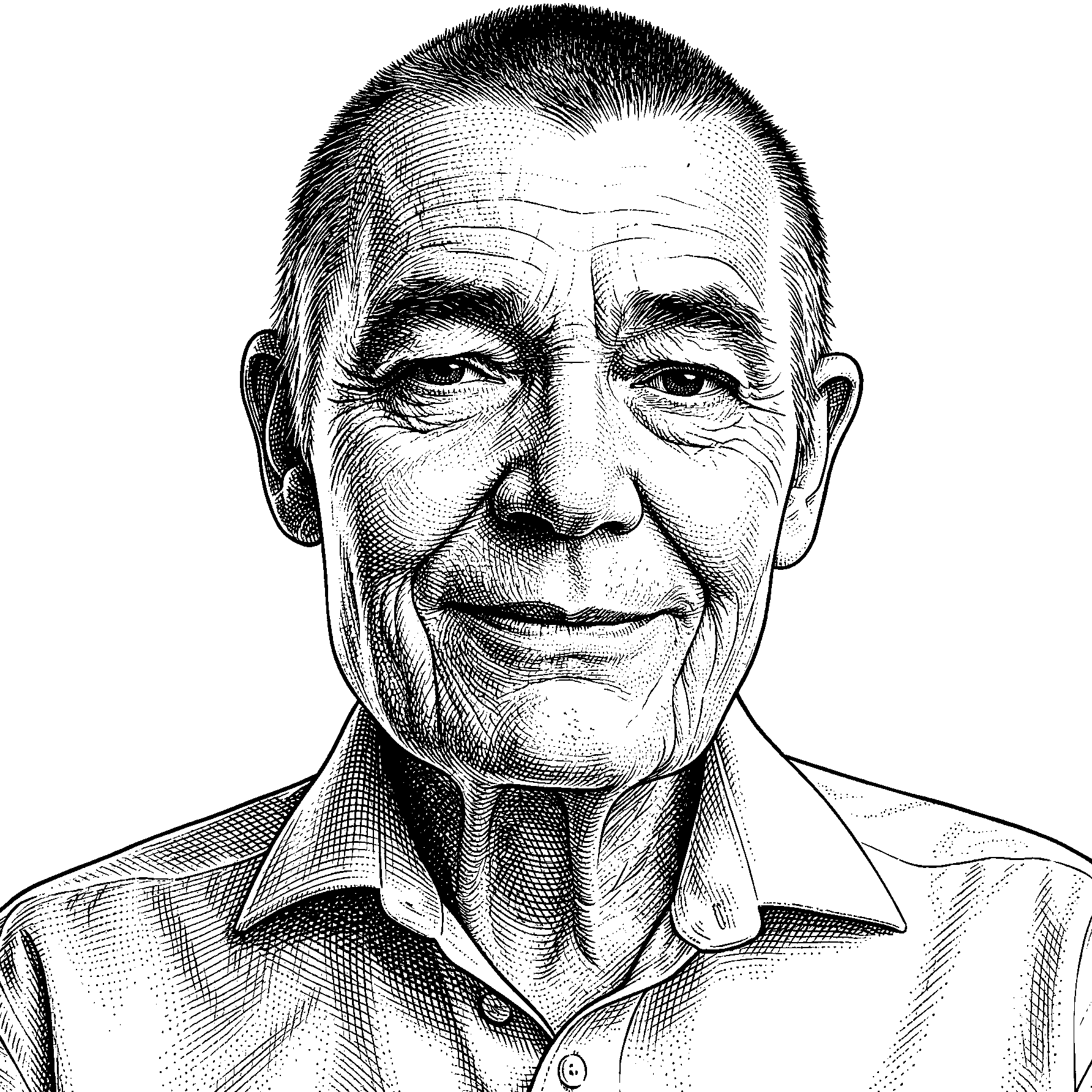
R. Michael Perry, PhD (1947–2026), was a computer scientist, author, and prominent figure in the cryonics and transhumanist movements. For nearly four decades, he served as Care Services Manager at the Alcor Life Extension Foundation in Scottsdale, Arizona, where he oversaw the stabilization and long-term maintenance of cryopreserved patients. On April 15, 2026, Dr. Perry was involved in a fatal motor vehicle accident as a pedestrian. True to his lifelong convictions, Alcor’s DART team immediately took him into care, and he received an excellent cryopreservation. He is now an Alcor patient, continuing his commitment to technological resurrection in the facility he served for so long. ¶ Beyond his technical role at Alcor, Perry was a prolific writer and philosopher. He is the author of Forever for All: Moral Philosophy, Cryonics, and the Scientific Prospects for Immortality (2000), a comprehensive work that argues for the ethical necessity and scientific feasibility of achieving physical immortality. His philosophical outlook, which he described as “Christian Atheist Universal Immortalism,” sought to bridge the gap between religious aspirations for an afterlife and the technological means to achieve it. He posited that a future superintelligence could utilize advanced simulations and information-recovery techniques to resurrect everyone who has ever lived, a concept rooted in the traditions of Russian Cosmism. ¶ Perry’s influence extended deeply into the organizational leadership of the transhumanist community. He was a cofounder and president of the Society for Universal Immortalism and an ordained minister for the Society for Venturism, where he performed ceremonies reflecting a commitment to the scientific conquest of death. Through his long-running column “For the Record” in Cryonics magazine, he became the primary historian of the cryonics movement, meticulously documenting its early failures and successes so that the lessons of the past could inform the technology of the future. ¶ Dr. Perry was a dedicated advocate for the “techno-psycho-cyber-heaven”—a future state dominated by benevolence and universal life extension. Gentle, soft-spoken, and principled, he was an anchor in the cryonics community for decades. He came in early, stayed late, and often remained at the facility for days at a time to ensure Alcor’s patients were always properly cared for. The cryonics movement owes him a debt of gratitude that cannot be overstated. Now, after watching over Alcor’s patients for nearly forty years, it is their turn to watch over him as he rests in cryopreservation, awaiting the future he worked so tirelessly to help create. ¶ His life’s work remains a testament to the belief that death is a problem to be solved through the rigorous application of science, mathematics, and a hopeful, rational philosophy.
Transcript
Speaker 1
We’ll now hear from Mike Perry. Mike has been active in transhumanist related work since the nineteen seventies and has worked at Alcor Foundation, which is a leading cryonics organization. Since 1987, he’s written a book, Forever for All, about the possibilities of attaining immortality and resurrection of the dead through scientific means. He holds a PhD in computer science from the University of Colorado and is currently exploring mathematical approaches to the problems of personal identity and resurrection.
Mike Perry
Let me make sure I know how to operate. Send the line when it goes forward. Okay, can everybody hear me? Well, I’m going to be talking about the possibility of Okay. Okay. Is that all right? Can you hear me?
Mike Perry
I’m going to be talking about the possibility of resurrecting the dead uh through technology. And I hope everybody is will find it interesting, whatever you’re theological uh orientation or whatever you think about cosmology or whatever. And uh
Mike Perry
This idea goes back a long ways. It’s nothing particularly original. The Russian philosopher Nikolai Fyodorov developed a theory of resurrection in the nineteenth century based on uh his understanding of of physics at the time. And he uh imagined the Newtonian universe and uh thought that uh just as you could uh map the um the motion of of uh planets and uh retrodict ancient uh solar eclipses and so on. if you could in the future, we should be able to track the motions of individual atoms and to arbitrary accuracy, and thereby we could determine their positions five hundred years ago and in that manner we could put the atoms back in the right places for the people that were living back then so we could resurrect these people.
Mike Perry
And anyhow, The advent of quantum mechanics with its uncertainty principle seems to throw a lot of cold water on that idea. It doesn’t look like You could actually do such a a mapping that would allow you to retrodict history.
Mike Perry
There are those who have come up with something they call quantum archaeology, which in effect seems to be saying, well, maybe you can do that after all. And maybe you can get back every bit of information and position of every atom in history. And you could just put those atoms back in the right places and get back the people. You didn’t want to mess around with individual atoms, you might just work with information and maybe you could upload the people into the right future computational devices so they could resume their consciousness that way.
Mike Perry
Well, anyway, I happen to be a skeptic of that sort of possibility, and I will also include things like the idea that we might be in a computer simulation. in which the states of computation have already been saved by the supreme programmer in such a way that you could get back all the data you need that way.
Mike Perry
And I would like to talk about another possibility entirely from all of that that I call parallel recreation. And it says in effect that you just have to put up with some loss of information, and you can’t get it back in any straightforward sense. And yet I still claim that in some reasonable sense you could resurrect the dead.
Mike Perry
And by resurrecting the dead I’m really talking mainly about in the first place getting a description of each person down to the you know down to the level of brain structure and so on. So it’s mainly, as I see it, an informational problem and uh
Mike Perry
Once you have the information, some people worry about whether if you use that to construct a body and that body was a copy of the original, but not The original, does that matter? From my point of view, it doesn’t matter. So suspend your disbelief a little bit if it matters to you.
Mike Perry
Anyway, so as I’ve said, quantum archaeology would sort of cut the Gordian knot, but no one and I knew. Did I turn it off? Okay, here we go. Yeah.
Mike Perry
So basically, what do you do? If you can’t get back that information, what are you going to do? And well, in a sense, you will get it back. But the answer to really whether you can do it or not depends on your worldview.
Mike Perry
And I want to introduce a certain idea that I think that uh reality, in my view, is underdetermined. What does that mean? Um it really means that that more well, let me just jump to something else first. And then I’ll get back to the reality thing.
Mike Perry
A certain important property for this resurrection idea is the multiverse. So I’m assuming there are multiple universes, and these multiple universes cover all the possibilities. So There are universes where there are people just like you folks with somebody just like me standing here among all the many other possibilities. And essentially infinitely many of all of that. So that turns out to be useful to rationalize the approach I’m going to Describe.
Mike Perry
And in this in the multiverse, I assume that all finite histories happen over and over in all their variations. And that word finite is highlighted because it does make a difference. Some people raise objections about If you’re going to talk about infinite histories, you might not have enough worlds to cover all the possibilities. So we’re all we need is finite histories. Maybe that’s too minor a point for most of you to bring up, but anyway It should be the case that in all these multiple universes you get all the variations of the finite history.
Mike Perry
So, you know. There are histories just like ours as far as we know, and other histories where certain battles were won by the opposition or somebody else other than what our books say. who our books say won the battles and other histories where the human race didn’t evolve, but an intelligent race of birds evolved on planet Earth, and you can go on from there. So there’s lots of variations out there.
Mike Perry
And like I say, under determinism, more than one theory fits the facts. The theory I’m going to present is not the only possible theory of reality, and I’m not claiming that all of them allow for resurrection. All I’m saying is that The one I offer, I think, will fit observations. At least I don’t think it can yet be overturned scientifically, and actually, I don’t think it ever will be. And as an example of what I’m talking about, that actually there’s some important questions that can’t be resolved by a unique theory that fits the facts. I’ll just say
Mike Perry
Consider whether a person survives sleep or not. When you wake up, is it really you or a copy of you? Do you lose continuity of consciousness? Is that a requirement, really, to have the same person? Well, it depends on how you want to define a person. That’s all it is. You can define a person where in such a way that it really is a requirement. And so you’re just dead if you so much as doze off. But that’s not the way I like to look at it myself, though. In fact, it goes to show you that you can choose the theory you like to a certain extent, and you might even say reality is malleable to a certain extent.
Mike Perry
Okay, so thinking like that, I’ve already been through this. What kind of an outlook on reality would I want to use for allow arguing that resurrections are possible? Roughly speaking, I call it informational realism. I’m not really prepared to argue this at length. today, but information is what is really there, and even solid matter could be seen as a sort of a virtual effect if you want to push things far enough. So that actually has some interesting consequences.
Mike Perry
And I’ve already introduced the idea of the multiverse and saying that there are copies of you and me, at least I think so, all distributed around reality as a whole. So you say, well, I wonder which one of those I am and am I where is here? And what I would say is, well Using an informational point of view, it doesn’t really make sense to say where you are. We’re neither here nor there. We are every place that exact copies of us are found. We’re distributed all over all these copies.
Mike Perry
And one other thing to say is that. Where you are distributed is not exactly where I’m distributed. So if I look at you, I can see your face, but I can’t see what’s behind that face. And so I’m distributed everywhere that I see a face that looks just like that one. But all those faces can have different things behind them. So in other words, the person might have different memories and so forth, but I can’t detect that. So my instantiations are distributed wherever I would see everything that looks just like what I’m seeing. But yours are going to be different. You’ll see every guy that looks like me, but it won’t be the same. Those guys won’t have the same thoughts in their head either. That’s an important point for some for, you know, I’ll get to it later. Okay.
Mike Perry
Okay, so how are we going to do resurrection? We will we will I will I propose that we do informed guesswork. We want to recreate people that we can think of as historical people. So the people we create should not have uh memories and such that contradict our historical records. Every person we create should be consistent with all the records.
Mike Perry
But if we limited ourselves just to that, just to the minimal uh the minimal fill in of information in somebody’s brain. If we fit the records, we would leave out way too much to reasonably say we resurrected. People, because you know, a few hundred years back there are probably many people that are aren’t even found in any records. And maybe you could find a DNA fragment or something. You aren’t really going to resurrect people like that. And so it is necessary, it would be necessary to fill in extra information.
Mike Perry
What I would say is that you could make different choices, but you would of course I would uh imagine doing a resurrection project, a whole Wow, I use up a lot of my time. Do a whole project like Friodor Imagine. So a lot of people would have mutually consistent memories, that you would create a timeline cohort that way. And one possible resurrection, one possible timeline cohort. And you might specially bond with that. I wouldn’t say that you couldn’t do others, but that one would actually be an authentic resurrection of people that actually live.
Mike Perry
I’m going to have to I was going to demonstrate a coin toss, but I’m out of time right now. You toss a coin and and cover and erase the information before you look at it. And you can toss it again, and in some sense, you get back that information because you’ve actually got two possibilities, but throughout the multiverse, both of those possibilities pop up again. All right.
Mike Perry
So, anyway, there’s a couple of people I especially want to resurrect are my parents. That’s their wedding picture from 1946. And well, you’d have very many bits to resurrect, but you fill in information that fits all the surviving records. And what you get is a version of them that’s authentic. And it’s not a version where they’re way over here and I’m way over here, because remember, we’re neither here nor there. So I think that’s probably the best you could do unless there really is something like quantum archaeology or a supreme programmer or something like that. If those things happen, fine. You don’t have to worry as much. But even if they don’t, there’s something else you have to go on. I could make the point.
Mike Perry
Have I got time? I think that to create this uh time line cohort of of everybody who ever lived in one version would if for the information storage it would take nothing worse than a nine mile wide asteroid size object to hold all the information. So it should be feasible in the future.
Mike Perry
One last point to make is I’m a cryonicist and I’m hoping that I won’t even have to go through this resurrection. I see this as a backstop. But I also think that if you can choose cryonics and you come back earlier, you can do more good and you can help with the resurrection rather than just being a beneficiary of it. It’s better to be a benefactor than just a beneficiary. So think about that. Looks like I’ve got 15 seconds.