apostasy
Authors (3)

Athanasius
Athanasius of Alexandria (c. 296–373 AD) was one of the most influential theologians in Christian history, serving as the twentieth Pope of Alexandria and playing a decisive role in the development of Trinitarian doctrine. His lifelong defense of the Nicene Creed against Arianism earned him the title ‘Father of Orthodoxy,’ while his writings on the incarnation articulated a vision of human transformation that continues to resonate in Eastern Orthodox theology and beyond. Born in Alexandria, Egypt, Athanasius received a thorough education in Greek literature, philosophy, and Christian scripture. As a young deacon, he accompanied Bishop Alexander to the Council of Nicaea in 325 AD, where he witnessed the formulation of the creed that would define Christian orthodoxy. Three years later, at approximately thirty years of age, Athanasius succeeded Alexander as bishop of Alexandria—a position he would hold for forty-five years despite being exiled five times by various emperors sympathetic to Arianism. Athanasius ’ s most enduring theological contribution appears in his treatise On the Incarnation , written when he was still a young man. In this work, he articulated the doctrine of theosis—the belief that God became human so that humans might become divine. This concept, sometimes expressed as ‘God became man that man might become god,’ became central to Eastern Orthodox spirituality and has profound implications for understanding human potential and destiny. Throughout his tumultuous career, Athanasius faced opposition from Arian bishops, imperial persecution, and periods of exile in the Egyptian desert, Rome, and elsewhere. Yet he persisted in defending what he understood as apostolic faith against theological compromise. His friendship with the desert monks, including Anthony the Great, influenced his biography of Anthony, which became foundational for Christian monasticism and hagiography. Athanasius’s doctrine of theosis resonates profoundly with transhumanist themes. His vision of humanity’s potential for transformation and participation in divine nature anticipates contemporary discussions of human enhancement and transcendence. The idea that humans are destined for a radical elevation of their nature—not merely moral improvement but ontological transformation—connects ancient Christian theology with modern aspirations for human flourishing beyond current limitations.

John A. Widtsoe
John Andreas Widtsoe (1872–1952) was a Norwegian-American scientist and apostle who brought a unique synthesis of scientific rigor and religious faith to his Church service. Born on an island among fisherfolk in Norway, he emigrated to Utah after his mother’s conversion. He graduated from Harvard with the highest honors and earned his doctorate from the University of Gottingen in Germany. Widtsoe became renowned for his expertise in irrigation and dry farming, serving as director of the Utah Agricultural Experiment Station and later as president of both Utah State Agricultural College and the University of Utah. He was called to the Quorum of the Twelve in 1921 and later served as president of the European Mission. A prolific author, Widtsoe wrote A Rational Theology and Evidences and Reconciliations , which addressed common questions about faith and doctrine. His marriage to Leah Dunford, granddaughter of Brigham Young, united him with a distinguished Church lineage. Despite personal tragedy, losing four of his seven children in infancy, he maintained a life of faithful service.
Orson F. Whitney
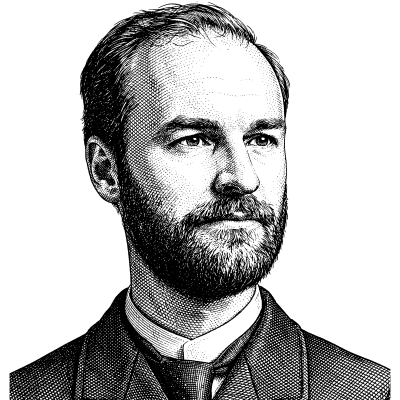
Orson Ferguson Whitney (1855–1931) was an apostle, historian, and poet who articulated an early vision for Mormon literature. Born in Salt Lake City, he was the son of Horace K. Whitney and Helen Mar Kimball, connecting him to both the Whitney and Kimball families prominent in early Church history. As a young man, Whitney aspired to be an actor, but during his mission to the Eastern States he discovered his calling as a writer and speaker. He served as bishop of the Eighteenth Ward for 28 years and as Assistant Church Historian before his call as an apostle in 1906. He also served in the Salt Lake City Council and as a State Senator. Whitney authored The History of Utah and biographies of Heber C. Kimball and Lorenzo Snow. His epic poem Elias, An Epic of the Ages represents a major work of early Mormon literature. His 1888 sermon “Home Literature” was the first to articulate a vision for distinctively Mormon literary arts. He also wrote hymns including “Savior, Redeemer of My Soul.”