identity
Articles (15)
Transhumanist Advent: The Messianic Pattern
Explore the Messianic pattern of lifting others to godhood versus the Satanic pattern of self-exaltation, and what this means for transhumanist theology.
The Prophetic Voice
Explore the broader meaning of prophecy beyond Church leadership, examining how the spirit of prophecy—rooted in testimony and feeling—applies to every believer's life.
CRISPR LOVE
Explore "CRISPR Love," a haunting poem by Gary Lee Parker that weaves gene editing metaphors with themes of sacrifice, identity, and the cost of reshaping oneself for love.
“Unto what shall I liken?” - Breaking the Fourth Wall of Revelation
Explore how semiotics and "breaking the fourth wall" in scripture reveal the evolving nature of religious language, self-awareness, and divine revelation in Mormon thought.
How a Ragamuffin became a Mormon Transhumanist
Discover how Rich Mullins' Ragamuffin Gospel inspired one woman's journey from seeking purpose among the poor to embracing Mormon Transhumanism as a path of radical service and hope.
Authors (6)

Blaire Ostler is a philosopher, author, and artist whose work explores the intersection of Mormon theology, transhumanism, and human identity. A ninth-generation Latter-day Saint, she has been a notable voice in conversations about the synthesis of religious tradition with technological progress and expanding theological inquiry. Ostler holds a Bachelor of Fine Arts in Design from the International Academy of Design and Technology–Seattle. Her background as an abstract modern artist deeply informs her philosophical work. Her paintings, characterized by their exploration of aesthetics and form, can be found in residences and businesses throughout Seattle. This artistic sensibility extends to her writing, where she examines the boundaries of traditional categories to explore a more expansive understanding of divinity and humanity. Ostler is the author of Queer Mormon Theology: An Introduction (2021), in which she engages with Mormon doctrinal concepts such as the nature of the divine, the significance of Heavenly Mother, and the potential for technological resurrection. Her involvement with the Mormon Transhumanist Association has been significant; she served on the Board of Directors for six years and as CEO from 2016 to 2018. Her transhumanist vision emphasizes active discipleship, where humanity participates in the work of God through morphological freedom and cognitive liberty. Blaire continues to write, paint, and speak on themes of identity, truth, and beauty, exploring the relationship between the human and the divine.

Chris Bradford is a co-founder and former president of the Mormon Transhumanist Association. He has a background in helping people explore and understand their ancestral histories, having worked for a company dedicated to genealogy. He recognizes the powerful impact of understanding and shaping the stories of our past on our understanding of ourselves. His interests include the intersection of transhumanism, Mormonism, and historical narratives, particularly as they relate to themes of memory, identity, and community. Visiting from his home in Switzerland, Bradford brings an international perspective to the Mormon Transhumanist Association. His conference talks often explore the concept of “redeeming our dead,” drawing parallels between ghost stories, genealogical research, and the transhumanist aspiration to enhance and extend life.
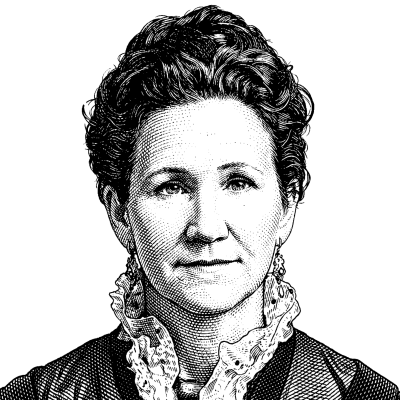
Elicia A. Grist
British actress Elicia Allely Grist lived from 1827 to 1898. She joined the Church of Jesus Christ of Latter-day Saints in May 1853, approximately five months following her husband, John Grist’s conversion. Her decision to join the church came at a significant personal cost, as her parents responded by disinheriting her. Throughout their lives together, the Grist family relocated frequently across England and Ireland, residing in Birmingham, Dublin, and Liverpool. The period in which Grist lived coincided with Britain’s Industrial Revolution, an era marked by sweeping economic, social, cultural, and political transformations. Among these changes was the invention of the steam printing press, which democratized access to printed materials and made them available to the expanding working class. This flourishing print culture provided a valuable public forum where individuals like Grist could articulate their values freely and document their religious experiences.
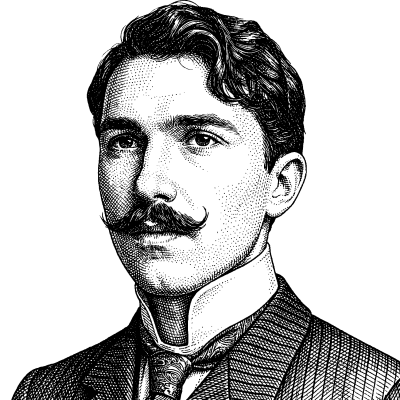
Nikos Kazantzakis
Nikos Kazantzakis (1883–1957) was a Greek writer, philosopher, and one of the most celebrated authors of the 20th century. Born in Heraklion, Crete, during Ottoman rule, he studied law at the University of Athens before pursuing philosophy in Paris under Henri Bergson. His dissertation explored Nietzsche’s philosophy of right and state. Kazantzakis is best known for Zorba the Greek , inspired by his friendship with a worker named Georgios Zorbas. The novel became world-famous after the 1964 film adaptation. His other major works include The Last Temptation of Christ , Christ Recrucified , and his epic poem The Odyssey: A Modern Sequel , which he considered his greatest achievement. He was nominated for the Nobel Prize in Literature nine times, losing to Albert Camus in 1957 by a single vote. Camus later said Kazantzakis deserved the honor “a hundred times more” than himself. His epitaph, inscribed on his tomb overlooking the mountains and sea of Crete, reads: “I hope for nothing. I fear nothing. I am free.”

Tad R. Callister
Tad Richards Callister (1945-2025) was a General Authority of The Church of Jesus Christ of Latter-day Saints who served in the Presidency of the Seventy from 2008 to 2014 and as Sunday School General President from 2014 to 2019. A graduate of Brigham Young University and UCLA Law School, Callister practiced law before his full-time church service. He has written and spoken extensively on the Atonement and the divine potential of humanity. His BYU Education Week address “Our Identity and Our Destiny” explored the Latter-day Saint understanding of human beings as literal children of God with divine potential, connecting this doctrine to questions of purpose and meaning.
Quotations (1)
 Wilford Woodruff