eternal progression
Articles (21)
What Is Mormon Transhumanism?
Explore how Mormon Transhumanism integrates faith and technology, merging theosis with superhuman ideals to pursue divine potential and human flourishing.
Transhumanist Advent: The Messianic Pattern
Explore the Messianic pattern of lifting others to godhood versus the Satanic pattern of self-exaltation, and what this means for transhumanist theology.
The Gospel of Tron
Explore the spiritual parallels between programming, creation, and Mormon theology—how creative processes mirror divine emergence and draw us closer to understanding God and eternity.
Transhumanist Advent: Christ as Invitation
Explore how Christ's life exemplifies a radical, ongoing invitation to expand morality and co-create a better world—a vision where transhumanism and Advent converge.
Transhumanist Advent: The Christmas Message
Explore how the Christmas narrative calls us not to be spectators but oath-makers, sharing in the burden of confronting evil and death alongside the divine.
Authors (29)

Allen Leigh is a veteran software engineer, electrical engineer, and author whose work seeks to harmonize the rigors of technical science with the principles of Latter-day Saint theology. With a professional career spanning forty-four years in the software industry and a background in electrical engineering, Leigh brings a pragmatic, systems-based perspective to religious inquiry, focusing on the structural mechanics of creation and eternity. Leigh’s intellectual contributions are best encapsulated in his book, One Mormon’s View of the Science-Religion Debate and the Quest for Eternity . In this text, he navigates the often-contentious boundary between empirical evidence and spiritual belief, arguing that the two disciplines are not mutually exclusive but rather complementary frameworks for understanding the universe. His work suggests that the perceived rift between science and religion often stems from a misunderstanding of the methodologies inherent to both. A key figure in discussions on Mormon Transhumanism, Leigh has applied his technical expertise to theological cosmology. His presentation at the MTAConf 2009 entitled “God, the Perfect Engineer” focused on the concept of “engineering design cycles”—the iterative processes used to plan, build, test, and refine complex systems. Leigh proposed a model in which God functions as a Master Engineer, utilizing similar design cycles in the creation of the earth. This framework raises profound questions regarding the nature of divine omnipotence and the practical realities of creation. By drawing parallels to earthly engineering projects—which are subject to constraints, iterations, and the risk of failure—Leigh investigates whether the creation of the earth followed a similar, non-linear path. He challenges his audience to consider if a divine creation project could, in theory, fail, and what the implications of such a failure would be for our understanding of God’s plan. Through this lens, Leigh encourages a view of the cosmos that appreciates the intricate, perhaps even experimental, nature of existence.

Basil the Great
Basil of Caesarea (330–379 AD), known as Basil the Great, was a bishop and influential theologian who supported the Nicene Creed. He was one of the Cappadocian Fathers, along with his brother Gregory of Nyssa and friend Gregory of Nazianzus. Basil made significant contributions to Christian monasticism and liturgy. His writings on the Holy Spirit explore how souls illuminated by the Spirit become spiritual themselves and send forth grace to others, becoming like God through divine participation. He established guidelines for monastic life that influenced both Eastern and Western monasticism, and his liturgy is still used in Eastern Orthodox churches. Basil’s theology of deification emphasizes the transformative work of the Holy Spirit in making humans partakers of the divine nature.

Caleb Jones is a speaker and thinker deeply engaged with the intersection of Mormon theology, transhumanism, and intergenerational connection. His work focuses on the spirit of Elijah, as referenced in Malachi, and its implications for creating faith-based connections across generations, both living and deceased. He advocates for a broader interpretation of this principle, extending it beyond traditional temple work to encompass a reconciliation of ancient wisdom with modernity. Jones draws upon G.K. Chesterton’s concept of the “democracy of the dead” to frame his exploration of tradition and remembrance. He posits that our ancestors, through their artifacts and influence, continue to participate in the present. He sees the redemption of the dead through these artifacts—books, music, laws, traditions—as a collective human endeavor involving various disciplines such as literary scholarship, archaeology, and religious studies. His perspective emphasizes the importance of engaging with the past to inform and enrich the future, particularly within the context of Mormonism and its emphasis on family history and genealogical work. Jones champions seeking a healthy balance and ongoing reconciliation of the hearts and minds of the dead and dying with the hearts and minds of the living, to redeem rising generations.

Charles W. Penrose
Charles William Penrose (1832–1925) was a British-born Latter-day Saint leader, journalist, hymn writer, and theologian who served as a member of the Quorum of the Twelve Apostles and later as First Counselor in the First Presidency of The Church of Jesus Christ of Latter-day Saints. Born in Camberwell, London, England, on February 4, 1832, Penrose was reportedly reading the Bible by age four. He converted to the LDS Church at eighteen, being baptized on May 14, 1850—a decision that cost him his relationship with his widowed mother, who disowned him for joining the faith. Penrose’s missionary service in Britain exceeded that of any other Latter-day Saint missionary, totaling over seventeen years. During his first decade-long mission, he wrote the beloved hymn “O Ye Mountains High” and authored “Rays of Living Light,” a series of missionary tracts used widely for nearly a century. In 1861, he finally emigrated to Utah with his wife Lucetta Stratford and their three children, crossing the plains by ox team to settle in Farmington, where he worked as a farmer, log hauler, and schoolteacher. Settling later in Ogden on the advice of Franklin D. Richards, Penrose entered journalism, publishing the Ogden Junction . In 1877, he became assistant editor of the church-owned Deseret News under George Q. Cannon, eventually serving as editor from 1898. His intellectual contributions extended to academia as professor of theology at Brigham Young Academy (1897–1899, 1901–1902) and as a founding director of the Genealogical Society of Utah in 1894. Ordained an apostle on July 7, 1904, Penrose served as president of the European Mission (1906–1910) before being called as Second Counselor to President Joseph F. Smith in 1911. Following Smith’s death, he continued as Second Counselor to Heber J. Grant and was elevated to First Counselor in 1921 after the death of Anthon H. Lund. His contributions to Utah statehood earned him recognition as one of its key architects. Penrose’s theological writings and sermons explored themes of eternal progression, human potential, and the relationship between faith and reason—ideas that resonate with transhumanist thought. His vision of humanity’s divine destiny and capacity for endless improvement reflected the optimistic theology of early Latter-day Saint leaders. He died in Salt Lake City on May 16, 1925, leaving a legacy as one of the most prolific missionaries, influential editors, and beloved hymn writers in LDS history.

Donald Bradley Jr. , affectionately known as Donnie, is a speaker and thinker exploring the intersection of transhumanism, art, and theology. Although chronologically 84 years old, Bradley has benefited from advanced life extension technologies that have rejuvenated his physical appearance to resemble someone closer to 18. He is a member of the Mormon Transhumanist Association. Bradley’s intellectual pursuits are wide-ranging, encompassing theoretical computer science, cybernetics, foundations of mathematics, algorithmic information theory, the psychology of creativity, literary studies, and cognitive poetics. His work explores the aesthetic sense of a god, and its relation to artistic practice and religious transhumanist quests. He is particularly interested in the works of Jorge Luis Borges, viewing Borges’ creations as a laboratory for godhood and an exemplary artist for transhumanists. He argues that in art, we are doing the work of a god in microcosm, training for eventual godhood. He points to Borges’ themes of eternity, and his ability to predict future developments in a way that is training for eventual godhood and a significant religious practice. Bradley explores the idea of literature and its relation to Mormon theology.
Quotations (45)
 Pierre Teilhard de Chardin
 Jeffrey R. Holland
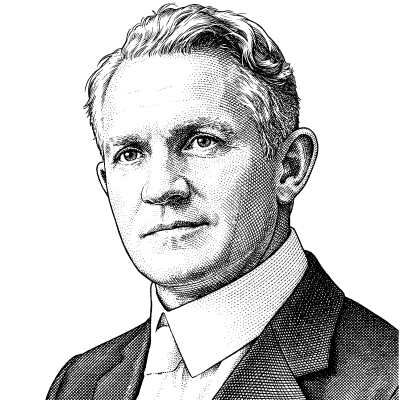 David O. McKay
 John A. Widtsoe
Videos (2)
Three Spiritual Exemplars for Religious Transhumanists
Roger Hansen examines the lives and ideas of three early twentieth-century thinkers—John A. Widtsoe, Alfred North Whitehead, and Pierre Teilhard de Chardin—whose work offers valuable insights for religious transhumanists. Drawing on their shared beliefs in evolutionary progress, the interconnectedness of life, and the compatibility of science and religion, Hansen argues that these "spiritual exemplars" provide a theological foundation for eternal progression and the ongoing technological revolution. He suggests that Widtsoe's commitment to reconciling LDS theology with science, Whitehead's process philosophy, and Teilhard's vision of humanity evolving toward an "Omega Point" all resonate deeply with Mormon transhumanist aspirations.
Lincoln Cannon
The Consolation: An Adaptation of the King Follett Sermon of Joseph Smith
Lincoln Cannon adapts Joseph Smith's King Follett Sermon for a transhumanist age, offering consolation to those mourning the loss of loved ones. He argues that God was once as we are now and became posthuman through the same creative process we ourselves may follow. Information, like matter and energy, is eternal and cannot be created from nothing or annihilated—our dead persist in the causal fabric of reality, awaiting resurrection through the work of compassionate creators. Cannon calls for a synthesis of ritual and engineering: sacraments without technology are impotent, while technology without meaning is empty.