science
Articles (39)
Exponential Change
Explore how exponential change reshapes our world at an accelerating pace, why Moore's Law reflects human vision, and what understanding exponential progress means for our future.
What Is Mormon Transhumanism?
Explore how Mormon Transhumanism integrates faith and technology, merging theosis with superhuman ideals to pursue divine potential and human flourishing.
Humanity+ and the Transhumanist Declaration
Explore the Transhumanist Declaration: a vision for enhancing human potential through technology while addressing risks, ethics, and the well-being of all sentience.
Mormon Naturalism
Explore how Mormon theology's unique naturalism—rejecting creation ex nihilo and a supernatural God—bridges faith and science, redefining divinity within natural law.
Technological Funemployment
Explore why technological unemployment is more myth than reality. Discover how automation historically creates new, safer, and more interesting jobs rather than eliminating work.
Authors (119)

Ada Lovelace
Augusta Ada King, Countess of Lovelace , was an English mathematician and writer who is widely regarded as the first computer programmer. Born Ada Gordon, the sole child of the poet Lord Byron and his mathematics-loving wife Annabella Milbanke, she was raised under a strict regimen of science and mathematics to counteract any inherited poetic temperament. Educated privately by William Frend, William King, and the noted scientific author Mary Somerville, Lovelace’s mathematical talents led her at age seventeen to a lifelong friendship and working relationship with Charles Babbage, inventor of the Difference Engine and Analytical Engine. In 1842, she translated an article about Babbage’s Analytical Engine by the Italian mathematician Luigi Menabrea, supplementing it with extensive notes that tripled its length. Lovelace’s notes contained what is recognized as the first algorithm intended for implementation on a machine—a method for calculating Bernoulli numbers—earning her the title of the world’s first computer programmer. More significantly, she was the first to recognize that the machine had applications beyond pure calculation. She envisioned encoding and manipulating information such as music, anticipating by more than a century the modern understanding of computers as general-purpose symbol processors. Though her contributions were largely forgotten after her death from uterine cancer at age 36, Lovelace’s legacy was rediscovered in the twentieth century. The programming language Ada was named in her honor, and the second Tuesday of October is now celebrated as Ada Lovelace Day, honoring women’s contributions to science, technology, engineering, and mathematics.

Adam Davis is a physicist and educator. He received his degree from Case Western University and currently teaches physics at Wayne State College. His academic pursuits extend beyond conventional physics into areas that bridge science and theology, particularly within the context of Latter-day Saint beliefs. Davis’s interests lie in exploring the concept of “spirit matter,” a topic central to Mormon theology. He approaches this subject through a scientific lens, seeking to develop models and frameworks for understanding its nature and properties. His work examines the theological necessity of spirit matter and considers its implications for human advancement and the attainment of divine potential. At the Mormon Thought & Engineering Vision conference held in 2009, Davis presented his perspectives on spirit matter, acknowledging the limited understanding currently available while emphasizing the importance of continued exploration. He examined scriptural and anecdotal accounts, including descriptions of spirit bodies and the spirit world, to inform his approach and stimulate further discussion on this complex topic—ultimately suggesting that no current models are completely adequate. Davis served on the MTA Board of Directors for several years.

Albert Einstein
Albert Einstein (1879–1955) was a German-born theoretical physicist widely regarded as one of the most influential scientists in human history. His contributions to physics fundamentally reshaped humanity’s understanding of space, time, energy, and the cosmos. Born in Ulm, in the Kingdom of Württemberg in the German Empire, Einstein developed the special and general theories of relativity, and his mass–energy equivalence formula, E = mc², has been called the world’s most famous equation. In 1921, he received the Nobel Prize in Physics for his discovery of the law of the photoelectric effect, a pivotal contribution to the development of quantum theory. Einstein held academic positions at the University of Zurich, Charles University in Prague, the Prussian Academy of Sciences, and, after emigrating to the United States in 1933, the Institute for Advanced Study in Princeton, New Jersey, where he remained until his death. Beyond his scientific achievements, Einstein was a profound philosophical thinker who often reflected on the relationship between science, mystery, and what he described as a “cosmic religious feeling.” He expressed deep reverence for the rational structure of the universe, once stating that “the most incomprehensible thing about the world is that it is comprehensible.” While not religiously orthodox, his sense of awe at the intelligibility of nature resonates with transhumanist and theological themes of humanity’s capacity to comprehend and participate in the divine order of creation. Einstein’s legacy speaks powerfully to the Mormon Transhumanist vision: his life exemplifies the extraordinary potential of the human mind to transcend prior limitations, to unveil deeper truths about reality, and to expand the horizon of what humanity can know and become.
Alexei Turchin is a researcher focused on existential risks and a prominent figure in the Russian transhumanist movement, having been involved since 2007. His work explores the intersection of technology and philosophy, particularly concerning the potential for technological resurrection. In his presentation, “You Only Live Twice” shared at MTAConf 2019 (whose theme was “Redeeming Our Dead”), Turchin delved into the possibility of using computer simulations of the past for technological resurrection. He draws inspiration from Russian cosmist Nikolai Fedorov, emphasizing the importance of preserving information, especially the human brain’s connectome, for future reconstruction of individuals. His research encompasses various methods for achieving technological resurrection, including cryonics, digital immortality, plastination, and advanced AI simulations of historical events. Turchin posits that a future superintelligence could potentially reconstruct even those whose resurrection was not actively prepared for.

Allen Hansen was raised in northern Israel within the LDS faith, an experience that has profoundly shaped his academic and personal interests. His interdisciplinary scholarship spans a wide range of subjects, reflecting his diverse background and intellectual curiosity. Hansen’s research interests are particularly focused on the intersection of Mormonism, Judaism, and Biblical studies, with a keen interest in late antiquity. He also has scholarly interests in journalism, as well as Eastern European and Middle Eastern studies. This breadth allows him to explore unique connections between seemingly disparate fields. Hansen also brings a practical dimension to his scholarship through interests in business management and positive psychology, both of which he frames through the lens of Zion — exploring how organizational design and individual well-being might serve a larger communal vision. This thread of his work aligns naturally with the Mormon Transhumanist Association's broader project of bridging faith and posthumanism.
Quotations (60)
 John A. Widtsoe
 James E. Talmage
 Parley P. PrattJohn A. Widtsoe
 Hugh B. Brown
Videos (6)
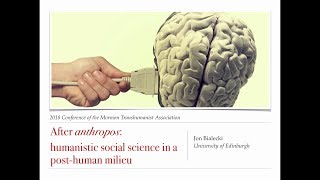
Jon Bialecki
After Anthropos: Humanistic Social Science in a Posthuman Milieu
Anthropologist John Bialecki examines what transhumanism means for a social science that defines itself as the study of the human. He traces anthropology’s Boasian tradition of treating humanity as remarkably plastic yet culturally dependent, then asks whether posthuman transformations—particularly radical scenarios like Churchland’s networked "centipede" minds—would place future beings beyond the reach of ethnographic methods. Bialecki proposes that anthropology’s capacity to study a transformed subject might serve as a test for whether that transformation enhances or abandons what we recognize as human.
George Handley
Caring for Creation: an LDS Perspective
George Handley outlines ten distinctive LDS doctrines that provide theological resources for environmental stewardship, including the belief that Earth is humanity's intended eternal home rather than a mere way station, that bodies and sensory experience are to be treasured, and that all life forms were created spiritually before physically and are entitled to "multiply and replenish." He emphasizes that LDS teachings on creation from unorganized matter (rather than ex nihilo) imply reverence for natural processes, while scriptures like the Word of Wisdom and the Law of Consecration mandate eating locally, consuming sparingly, and redistributing resources to the poor. Handley argues that the Anthropocene demands Latter-day Saints bring together both scientific literacy and religious values to adequately respond to environmental challenges.
Steven Peck
The Evolution of Novelty in an Open Universe: Requiem for Laplace's Demon
Steven Peck challenges the deterministic "block universe" of Laplace's demon, arguing that genuine randomness—rooted in quantum events—bubbles up through biology to create an open, evolving cosmos. Drawing on chaos theory, emergence, and evolutionary biology, he contends that novelty is continuously generated in ways that were never predetermined at the Big Bang. For Peck, this openness has profound theological implications: if God has an embodied, biological nature, then faith, hope, and charity are not merely earthly virtues but eternal necessities for navigating a universe where the future remains genuinely unwritten.
Amit Goswami
Amit Goswami on Quantum Physics, Consciousness and Health
Amit Goswami argues that quantum physics reveals a reality beyond space-time—a domain of potentiality from which consciousness chooses what becomes actual. He presents experimental evidence for nonlocal communication between correlated minds, showing that intention and meditation can produce measurable brain activity in distant subjects. Goswami applies these principles to health and healing, proposing that blocked emotions—particularly suppressed love associated with the heart chakra—can impair immune function and contribute to diseases like breast cancer. He advocates for a science that treats humans not as machines but as conscious beings capable of participating in their own healing through quantum leaps of insight and transformation.
Three Spiritual Exemplars for Religious Transhumanists
Roger Hansen examines the lives and ideas of three early twentieth-century thinkers—John A. Widtsoe, Alfred North Whitehead, and Pierre Teilhard de Chardin—whose work offers valuable insights for religious transhumanists. Drawing on their shared beliefs in evolutionary progress, the interconnectedness of life, and the compatibility of science and religion, Hansen argues that these "spiritual exemplars" provide a theological foundation for eternal progression and the ongoing technological revolution. He suggests that Widtsoe's commitment to reconciling LDS theology with science, Whitehead's process philosophy, and Teilhard's vision of humanity evolving toward an "Omega Point" all resonate deeply with Mormon transhumanist aspirations.