mormon authorities
Authors (53)

B. H. Roberts
Brigham Henry Roberts (1857–1933) was an English-born Latter-day Saint leader, historian, theologian, and politician who became one of Mormonism’s foremost intellectuals. He served as a member of the First Council of the Seventy for nearly five decades and produced foundational works of Church history and theology that shaped Latter-day Saint scholarship throughout the twentieth century. Born into poverty in Warrington, Lancashire, England, Roberts’s childhood was marked by hardship. His father struggled with alcoholism and gambling, leading Roberts to later describe his early years as “a nightmare” and “a tragedy.” After both parents converted to the Church in 1857, his mother emigrated to Utah in 1862, leaving young Roberts in England. In 1866, at age nine, he walked much of the way across the plains—often barefoot—to reach Salt Lake City and reunite with his family. Roberts graduated first in his class from the University of Deseret (now the University of Utah) in 1878. He served multiple missions, including as president of the Southern States Mission beginning in 1883. During this assignment, he faced the tragedy of the Cane Creek Massacre in 1884, personally recovering the bodies of two murdered missionaries while disguised to protect his identity. Like many Latter-day Saint men of his era, he served prison time for practicing plural marriage. In 1888, Roberts became one of the seven presidents of the First Council of the Seventy, the Church’s third-highest governing body, a position he held until his death. He also served as Assistant Church Historian from 1902 to 1933. Elected to the U.S. House of Representatives in 1898, Congress denied him his seat due to national concerns about polygamy—a pivotal moment in early twentieth-century political history. Roberts’s scholarly output was prodigious. He edited the seven-volume History of the Church of Jesus Christ of Latter-day Saints and independently authored the six-volume Comprehensive History of the Church . His theological masterwork, The Truth, the Way, and the Life , remained unpublished during his lifetime due to debates with Church leadership over his assertions regarding earth’s age and organic evolution. A “defender of the faith,” he argued that religious truth could withstand rigorous academic examination, contributing to the development of Mormon apologetics while maintaining intellectual honesty about challenges to faith.

Blaire Ostler is a philosopher, author, and artist whose work explores the intersection of Mormon theology, transhumanism, and human identity. A ninth-generation Latter-day Saint, she has been a notable voice in conversations about the synthesis of religious tradition with technological progress and expanding theological inquiry. Ostler holds a Bachelor of Fine Arts in Design from the International Academy of Design and Technology–Seattle. Her background as an abstract modern artist deeply informs her philosophical work. Her paintings, characterized by their exploration of aesthetics and form, can be found in residences and businesses throughout Seattle. This artistic sensibility extends to her writing, where she examines the boundaries of traditional categories to explore a more expansive understanding of divinity and humanity. Ostler is the author of Queer Mormon Theology: An Introduction (2021), in which she engages with Mormon doctrinal concepts such as the nature of the divine, the significance of Heavenly Mother, and the potential for technological resurrection. Her involvement with the Mormon Transhumanist Association has been significant; she served on the Board of Directors for six years and as CEO from 2016 to 2018. Her transhumanist vision emphasizes active discipleship, where humanity participates in the work of God through morphological freedom and cognitive liberty. Blaire continues to write, paint, and speak on themes of identity, truth, and beauty, exploring the relationship between the human and the divine.

Brigham Young
Brigham Young (1 June 1801 – 29 August 1877) was the second President of The Church of Jesus Christ of Latter-day Saints and the architect of the Mormon settlement of the American West. Born in poverty in Whitingham, Vermont, he had only eleven days of formal schooling but became an accomplished carpenter and craftsman. Young joined the Church in 1832 after two years of examining the Book of Mormon, and was called to the Quorum of the Twelve Apostles in 1835. Following Joseph Smith’s assassination in 1844, Young assumed leadership of the Church and organized the epic westward migration. In 1847, he led the first group of pioneers 1,300 miles across the Great Plains to the Salt Lake Valley, declaring upon arrival, “This is the right place.” Nicknamed “American Moses,” Young supervised the overland trek of 60,000 to 70,000 pioneers and founded 350 to 400 settlements across the western territories. Four days after arriving in the barren Salt Lake Valley, he designated the exact location for the Salt Lake Temple. He established the Perpetual Emigration Fund, which helped some 30,000 immigrants reach America. Despite limited formal education, he founded the institutions that became Brigham Young University and the University of Utah. Young served as the first governor of Utah Territory from 1850. He practiced plural marriage, with at least 20 wives who bore him 57 children. At his death, he was the wealthiest man in Utah. His extraordinary organizational abilities and vision transformed a persecuted religious community into a thriving civilization in the desert.

Carl Youngblood co-founded the MTA in 2006 and has served since 2021 as its President and CEO. He is engaged with the Association’s efforts to explore the intersection of Mormon theology and transhumanist philosophy. Among the many initiatives that Carl has been involved with, he has designed and built the Association's current website, which unifies all prior content in a single location using inspiring visuals and animations.

Charles W. Penrose
Charles William Penrose (1832–1925) was a British-born Latter-day Saint leader, journalist, hymn writer, and theologian who served as a member of the Quorum of the Twelve Apostles and later as First Counselor in the First Presidency of The Church of Jesus Christ of Latter-day Saints. Born in Camberwell, London, England, on February 4, 1832, Penrose was reportedly reading the Bible by age four. He converted to the LDS Church at eighteen, being baptized on May 14, 1850—a decision that cost him his relationship with his widowed mother, who disowned him for joining the faith. Penrose’s missionary service in Britain exceeded that of any other Latter-day Saint missionary, totaling over seventeen years. During his first decade-long mission, he wrote the beloved hymn “O Ye Mountains High” and authored “Rays of Living Light,” a series of missionary tracts used widely for nearly a century. In 1861, he finally emigrated to Utah with his wife Lucetta Stratford and their three children, crossing the plains by ox team to settle in Farmington, where he worked as a farmer, log hauler, and schoolteacher. Settling later in Ogden on the advice of Franklin D. Richards, Penrose entered journalism, publishing the Ogden Junction . In 1877, he became assistant editor of the church-owned Deseret News under George Q. Cannon, eventually serving as editor from 1898. His intellectual contributions extended to academia as professor of theology at Brigham Young Academy (1897–1899, 1901–1902) and as a founding director of the Genealogical Society of Utah in 1894. Ordained an apostle on July 7, 1904, Penrose served as president of the European Mission (1906–1910) before being called as Second Counselor to President Joseph F. Smith in 1911. Following Smith’s death, he continued as Second Counselor to Heber J. Grant and was elevated to First Counselor in 1921 after the death of Anthon H. Lund. His contributions to Utah statehood earned him recognition as one of its key architects. Penrose’s theological writings and sermons explored themes of eternal progression, human potential, and the relationship between faith and reason—ideas that resonate with transhumanist thought. His vision of humanity’s divine destiny and capacity for endless improvement reflected the optimistic theology of early Latter-day Saint leaders. He died in Salt Lake City on May 16, 1925, leaving a legacy as one of the most prolific missionaries, influential editors, and beloved hymn writers in LDS history.
Quotations (175)
 John A. Widtsoe
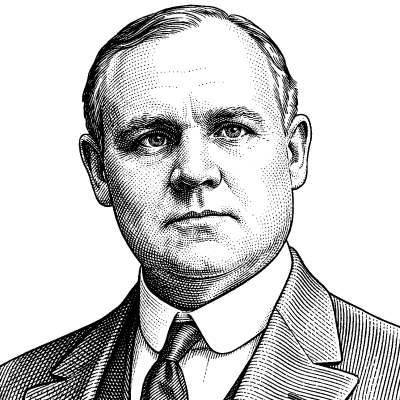 James E. Talmage
 Jeffrey R. Holland
 Joseph Smith