love
Articles (14)
CRISPR LOVE
Explore "CRISPR Love," a haunting poem by Gary Lee Parker that weaves gene editing metaphors with themes of sacrifice, identity, and the cost of reshaping oneself for love.
White Hot Life
Explore Gary Lee Parker's visceral poem "White Hot Life," a cosmic meditation on humanity's desperate, dazzling fight against the dark—sparks of light streaming through interstellar night.
Transhumanist Advent: He touched the man's ear and healed him
Explore how Christ's healing of Malchus' ear challenges religious zealotry, calling us to be healers and peacemakers instead of defenders wielding institutional swords.
Transhumanist Advent: The Christmas Message
Explore how the Christmas narrative calls us not to be spectators but oath-makers, sharing in the burden of confronting evil and death alongside the divine.
The Problem of Pain
Exploring pain not as a logical problem but as a visceral human experience—poverty, loss, and injustice that challenges even real Gods and demands more than future promises.
Authors (7)
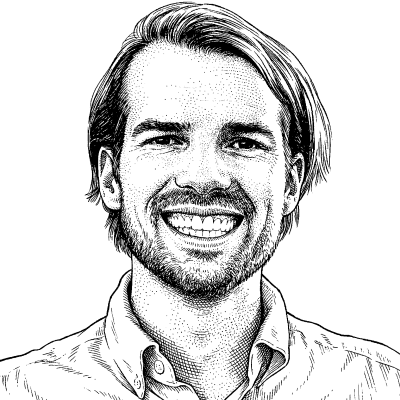
Ben Romney is a senior software engineer at Qualtrics. Outside of his professional career, he pursues his interest in moral philosophy. He presented at the MTAConf 2020 on his paper, “A Gradient Rubric for Human and Non-Human Utility,” available at bromney.com/ethicspaper.pdf. Romney’s work focuses on expanding ethical considerations beyond the human species to encompass animals, plants, and potentially robots, all in service of maximizing global happiness. He advocates for a utilitarian approach, proposing a gradient rubric to quantify various life forms’ capacity for happiness, aiming to prioritize efforts to improve the world for all sentient beings.
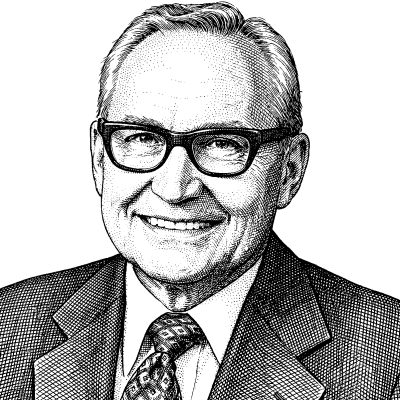
L. Tom Perry
Lowell Tom Perry (5 August 1922 – 30 May 2015) was an American businessman and religious leader who served as a member of the Quorum of the Twelve Apostles of The Church of Jesus Christ of Latter-day Saints for over forty years. Born in Logan, Utah, to a father who served as bishop throughout Perry’s childhood, he developed an early grounding in Church service. From 1942 to 1944, Perry served a mission in the Northern States Mission headquartered in Chicago. After returning, he joined the United States Marine Corps and was assigned to the 2nd Marine Division, landing on Saipan where he spent about a year and helped construct an LDS chapel on the island. He was among the American troops sent to occupy Japan after the war. Perry graduated from Utah State Agricultural College (now Utah State University) in 1949 with a bachelor’s degree in finance, having served as president of the university’s Associated Students. His professional career was spent in retail, climbing the corporate ladder to become a top executive in department stores across Idaho, California, New York, and Massachusetts before entering full-time Church service. Called as an Assistant to the Quorum of the Twelve Apostles in 1972, Perry was sustained as an Apostle on April 6, 1974, and ordained five days later. He married Virginia C. Lee in 1947; she died of cancer in December 1974. He remarried Barbara Dayton in 1976. Known for his optimism and big smile, Perry served faithfully until his death from thyroid cancer in 2015. His decades of service exemplified the integration of professional excellence with lifelong religious commitment.

Melissa Wei-Tsing Inouye
Melissa Wei-Tsing Inouye was a scholar and historian who explored the intersection of religion and culture in Greater China, global Mormonism, and 20th-century Chinese Christianity. She received her PhD in East Asian languages and civilizations from Harvard University in 2011. Her major work, China and the True Jesus: Charisma and Organization in a Chinese Christian Church (Oxford University Press, 2019), provides a comprehensive history of the True Jesus Church and charismatic Christian movements in modern China. In addition to her academic research, Inouye was a prolific writer and essayist known for her candid reflections on faith, motherhood, and the global church. Her memoir, Crossings: A Bald Asian American Latter-day Saint Woman Scholar's Ventures through Life, Death, Cancer, and Motherhood (2019), and her subsequent book, Sacred Struggle: Seeking Christ on the Path of Most Resistance (2023), examined the role of suffering and community within the Latter-day Saint experience. She was also a founding member of the Global Mormon Studies research network and served on the advisory board of the Neal A. Maxwell Institute for Religious Scholarship. Inouye passed away on April 23, 2024, at the age of 44, following a seven-year battle with colon cancer. She is remembered for her work bridging Chinese history, global religious movements, and transhumanist ideals, as well as for her commitment to fostering a more inclusive and globally-aware religious community.

Neal A. Maxwell
Neal Ash Maxwell (1926–2004) was a member of the Quorum of the Twelve Apostles of The Church of Jesus Christ of Latter-day Saints from 1981 until his death. He was known for his eloquent speaking and writing style. Born in Salt Lake City, Maxwell served in World War II and later earned a PhD in political science. He served as Commissioner of the Church Educational System and was Executive Vice President of the University of Utah before his call to the Seventy and later the Twelve. His teachings often explored the tension between absolute truth and fraternal love, drawing from diverse sources including Thomas Merton and Mahatma Gandhi. He taught that love is the only answer to the challenge of possessing truth while remaining fraternal with others who see differently.

Randall Paul is a theorist deeply engaged with questions of value alignment, particularly within the context of Mormon cosmology and transhumanist thought. His work explores the nature of intelligence, divine purpose, and eternal sociality, drawing on Latter-day Saint theology while also critically examining its relationship with traditional Christian influences. Paul’s perspective is rooted in the belief that intelligences have always existed as individual, self-aware entities with infinite memories and a capacity for dynamic social interaction. Paul challenges conventional interpretations of the glory of God, positing that it lies not merely in intelligence itself, but in the capacity of intelligences to freely love and interact with one another. He suggests that our current mortal existence is an experiment designed to improve our ability to trust and love, preparing us for a more harmonious eternal life. He frames the Mormon Transhumanist Association (MTA) as a microcosm of this process, a space for superhuman entities—or gods—to learn how to better interact and foster mutual love. In his explorations, Paul questions the uncritical embrace of transhumanist ideals of longevity and enhanced capacities, arguing that the fundamental challenge lies in navigating the complexities of freedom and mutual influence within eternal societies. He emphasizes the importance of freely given and received love as the most valuable—and most scarce—resource in the cosmos, suggesting that intelligences exist in societies to expand the possibilities for these experiences. His aim is to provoke reflection on the deeper purposes of existence and the nature of divine love in a transhuman future.
Quotations (7)
 Joseph Smith
 Russell M. Nelson
Videos (2)
Chris Bradford
Open Thou Mine Eyes
Chris Bradford explores the tension between technological instrumentalism and genuine human relationship, drawing on Martin Buber's distinction between "I-It" and "I-Thou" encounters. He argues that a purely technological approach to the world risks reducing people and nature to mere objects, and that Mormon transhumanism must complement its technological aspirations with the cultivation of empathy, charity, and recognition of the divine in others. Bradford contends that the grace saturating the world—visible when our "eyes are opened"—calls disciples of Christ to see and serve God in every neighbor, making the transhumanist project a fundamentally religious endeavor.
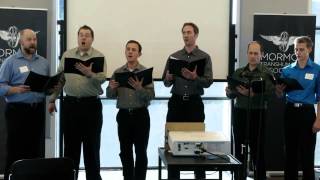
You Are the New Day
The MTA Barbershop Chorus performs John Rutter's "You Are the New Day," a hymn of hope and renewal. Introduced by a reflection on humanity's responsibility to shape the future through "good minds and loving hearts," the performance celebrates themes of love, life, and the dawning possibility of each new day—affirming that hope persists even when time seems to be running out.