ecumenism
Articles (6)
A Primer Primer
Discover the Mormon Transhumanist Association's Primers—short, accessible introductions to key ideas in Mormon Transhumanism, designed for meetups, conversations, and curious minds of all ages.
God-fearing Atheist
Explore Blaire Ostler's journey from a seven-year-old doubter in Mormon Sunday School to a self-described "God-fearing atheist," questioning faith, belief, and belonging.
Windy Days
Exploring faith through the metaphor of wind—unseen yet undeniable. A reflection on merging science, religion, and mystery into a unified understanding of existence.
Creator Status: Are We There Yet?
Exploring how No Man's Sky's 18 quintillion procedurally generated planets brings humanity closer to creator status—and what that means for our theological and technological future.
Made in the Image of God
Explore how Joan of Arc's radical claim to divinity connects with Mormon theology, the Dead Sea Scrolls, and the enduring belief that humanity is made in God's image.
Authors (9)

Gerrit W. Gong
Gerrit Walter Gong (born 23 December 1953) is an American diplomat, scholar, and religious leader who serves as a member of the Quorum of the Twelve Apostles of The Church of Jesus Christ of Latter-day Saints—the first person of Chinese descent to hold this position. Born in Redwood City, California, he shares his birthday with Joseph Smith. His grandparents emigrated from China, and he has traced his ancestry 33 generations to First Dragon Gong, born in A.D. 837 during the Tang dynasty. Gong received a bachelor’s degree in Asian and University studies from Brigham Young University in 1977, then attended Oxford University as a Rhodes Scholar, earning a master of philosophy degree in 1979 and a doctorate in international relations in 1981. His diplomatic career included service as special assistant to the undersecretary of state, special assistant to the U.S. ambassador in Beijing, personal advisor to the Chief Justice during his China visit, and executive officer for President George H.W. Bush’s visit to China. He held the Freeman Chair in China studies and served as Asia Director of the Center for Strategic and International Studies, testifying before Congress on East Asia issues. He has taught at Oxford, Johns Hopkins, Georgetown, and BYU, where he served as assistant to the president for planning and assessment until 2010. Gong was sustained as an Apostle on March 31, 2018, filling a vacancy created by the death of Thomas S. Monson. Married to Susan Lindsay since 1980, he is the first member of the Quorum of the Twelve in a multiracial marriage. They have four sons. His background in international relations and Chinese culture brings unique perspective to the Church’s global mission.
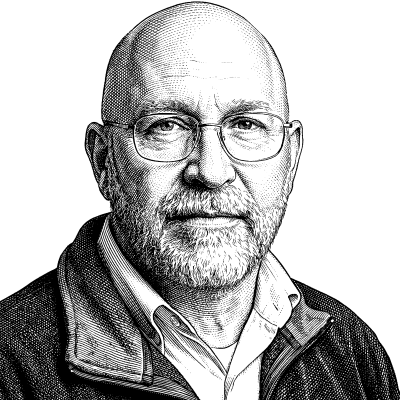
James McLean Ledford is a Christian transhumanist thinker and technologist whose work explores the convergence of faith, reason, and emerging technology. He came to broader attention within transhumanist circles through his participation in the Transhumanism and Spirituality conference held in 2010, where he presented on the theme of Christian transhumanism—situating the aspirations of the transhumanist movement within the theological and philosophical traditions of Christianity. In his 2010 presentation at the Transhumanism and Spirituality Conference, Ledford engaged with questions central to the Christian transhumanist philosophy: the moral imperative to overcome suffering and death, the relationship between human creativity and divine purpose, and the compatibility of technological enhancement with Christian anthropology. Drawing on scriptural and theological sources, he argued that the pursuit of radical human transformation need not stand in opposition to Christian faith, but may in fact represent a fulfillment of humanity's God-given capacity for reason, creativity, and stewardship. His perspective reflects a tradition of thought that sees science and technology not as rivals to spiritual life, but as instruments through which humanity participates in an ongoing work of creation and redemption. Ledford's engagement with these themes places him within a growing ecumenical movement of religiously committed transhumanists who seek to articulate a vision of the future that is at once technologically ambitious and spiritually grounded. Unlike secular transhumanism, which often brackets or dismisses metaphysical commitments, Christian transhumanism—as Ledford and others have framed it—insists that the deepest motivations for overcoming human limitation are themselves theological: rooted in love, hope, and the belief that creation is oriented toward flourishing. His work remains a meaningful contribution to the ongoing conversation between religious communities and transhumanist philosophy, a dialogue that the Mormon Transhumanist Association has been instrumental in fostering since its founding. Ledford's willingness to engage these questions publicly, and to articulate a coherent Christian framework for thinking about technological transformation, reflects the kind of intellectually serious, spiritually committed engagement that this conversation requires.
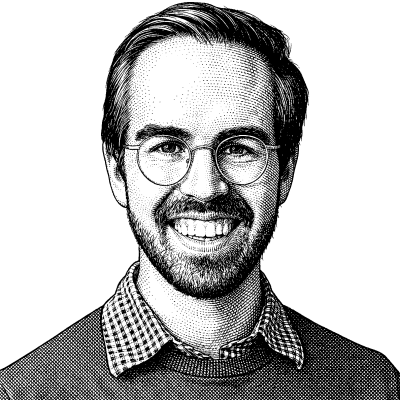
Jaxon Washburn is a Ph.D. student in Near Eastern Languages and Cultures with a focus on Armenian Studies at UCLA. He holds a Master of Theological Studies in History of Christianity from Harvard Divinity School (2023) and dual bachelor’s degrees in Religious Studies and History from Arizona State University (2021), both earned summa cum laude. Raised in an interfaith household, Jaxon has long been passionate about religious studies and interfaith activism, with early speaking engagements at venues including the Parliament of the World’s Religions and the United Nations. He formerly served as youth advisor for the Arizona Interfaith Movement and as a member of the Mormon Transhumanist Association. He went on to serve a mission for the Church of Jesus Christ of Latter-day Saints in Armenia—an experience that profoundly shaped the trajectory of his academic career. At Harvard Divinity School, Jaxon deepened his commitment to both scholarship and faith. He worked as a Research Associate with the Harvard Pluralism Project, contributing to efforts promoting religious literacy and interreligious engagement. His studies there also led to a published essay, “Mormonism: The Most American ‘Religious Other,’” in the Harvard Divinity Bulletin (Fall/Winter 2022). During his time at HDS, he developed a strong interest in Armenian religious history, studying Classical Armenian and working with Dr. Christina Maranci following the reestablishment of Harvard’s Mashtots Chair for Armenian Studies. Jaxon’s current research interests encompass the history of Christianity, Eastern and Armenian Christianity, mediums of interreligious exchange, and religious pluralisms in the South Caucasus. His earlier work on intersections between Hindu and Latter-day Saint traditions around themes of transfiguration and divine embodiment has broadened into a wider exploration of how religious communities interact, exchange, and develop across cultural boundaries.
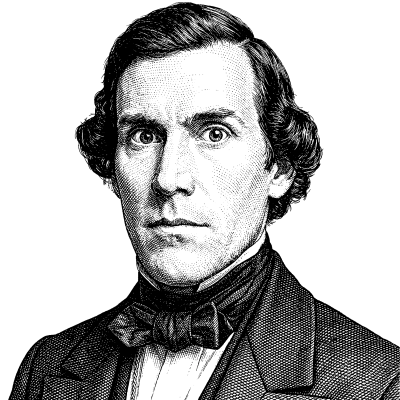
Orson Pratt
Orson Pratt (1811–1881) was an original member of the Quorum of the Twelve Apostles, a mathematician, and a prolific writer for the early Latter-day Saint movement. The younger brother of Parley P. Pratt, he was baptized on his nineteenth birthday in 1830 and ordained an apostle in 1835. He became the last surviving member of the original Twelve. On July 21, 1847, Pratt became the first Latter-day Saint to enter the Salt Lake Valley, arriving three days before the main pioneer company. He preached the first sermon in the valley and dedicated it to the Lord. He and William Clayton also invented a precursor to the modern odometer to measure their journey. Throughout his life, Pratt pursued his strong interest in mathematics and astronomy. He published New and Easy Method of Solution of the Cubic and Biquadratic Equations and Key to the Universe. He served as Church Historian and Recorder, edited Church periodicals, and divided the Book of Mormon and Doctrine and Covenants into verses with cross-references.

Pace Ellsworth is a marketing consultant specializing in small businesses within the technology and finance sectors. Born in Abu Dhabi, United Arab Emirates, as the son of diplomat and linguist Matt Alan Ellsworth, he possesses a global perspective and a keen interest in the intersection of technology and culture. Ellsworth graduated from Brigham Young University with a bachelor’s degree in linguistics and minors in both Spanish and Linguistic Computing. This diverse academic background informs his approach to marketing and communication, particularly within the rapidly evolving tech landscape. He describes himself as an anarcho-transfigurist, demonstrating an interest in the radical potential of technology to reshape society and individual agency. Ellsworth’s core interests lie in classical liberalism and futurism. He emphasizes the importance of individual agency and the power to act according to one’s conscience. He champions solutions that expand freedom and progress away from limitations, especially using technological progress to connect individuals across the planet to collaborate and solve problems.
Quotations (13)

 B. H. Roberts