pragmatism
Articles (17)
Exponential Change
Explore how exponential change reshapes our world at an accelerating pace, why Moore's Law reflects human vision, and what understanding exponential progress means for our future.
A Primer Primer
Discover the Mormon Transhumanist Association's Primers—short, accessible introductions to key ideas in Mormon Transhumanism, designed for meetups, conversations, and curious minds of all ages.
Technological Funemployment
Explore why technological unemployment is more myth than reality. Discover how automation historically creates new, safer, and more interesting jobs rather than eliminating work.
Transhumanist Advent: Christ as Invitation
Explore how Christ's life exemplifies a radical, ongoing invitation to expand morality and co-create a better world—a vision where transhumanism and Advent converge.
Transhumanist Advent: He touched the man's ear and healed him
Explore how Christ's healing of Malchus' ear challenges religious zealotry, calling us to be healers and peacemakers instead of defenders wielding institutional swords.
Authors (29)
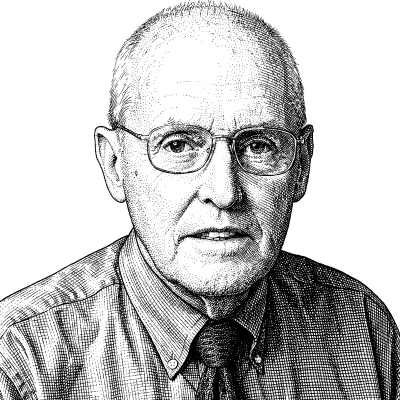
Allen Leigh is a veteran software engineer, electrical engineer, and author whose work seeks to harmonize the rigors of technical science with the principles of Latter-day Saint theology. With a professional career spanning forty-four years in the software industry and a background in electrical engineering, Leigh brings a pragmatic, systems-based perspective to religious inquiry, focusing on the structural mechanics of creation and eternity. Leigh’s intellectual contributions are best encapsulated in his book, One Mormon’s View of the Science-Religion Debate and the Quest for Eternity . In this text, he navigates the often-contentious boundary between empirical evidence and spiritual belief, arguing that the two disciplines are not mutually exclusive but rather complementary frameworks for understanding the universe. His work suggests that the perceived rift between science and religion often stems from a misunderstanding of the methodologies inherent to both. A key figure in discussions on Mormon Transhumanism, Leigh has applied his technical expertise to theological cosmology. His presentation at the MTAConf 2009 entitled “God, the Perfect Engineer” focused on the concept of “engineering design cycles”—the iterative processes used to plan, build, test, and refine complex systems. Leigh proposed a model in which God functions as a Master Engineer, utilizing similar design cycles in the creation of the earth. This framework raises profound questions regarding the nature of divine omnipotence and the practical realities of creation. By drawing parallels to earthly engineering projects—which are subject to constraints, iterations, and the risk of failure—Leigh investigates whether the creation of the earth followed a similar, non-linear path. He challenges his audience to consider if a divine creation project could, in theory, fail, and what the implications of such a failure would be for our understanding of God’s plan. Through this lens, Leigh encourages a view of the cosmos that appreciates the intricate, perhaps even experimental, nature of existence.

Amit Goswami is a scientist and researcher who challenges mainstream scientific materialism, particularly in its application to consciousness, health, and healing. He advocates for the integration of spirituality with medicine and seeks to demonstrate the importance of consciousness in these areas—a view often dismissed by conventional scientific paradigms. Goswami draws heavily on the principles of quantum physics to argue for a reality where consciousness plays a fundamental role. He posits that the prevailing materialistic worldview, which treats the body and mind as mere machines, inhibits our understanding of health, healing, and the human experience. He believes that quantum physics offers an alternative perspective, one that acknowledges the subjective aspect of consciousness and its potential impact on our well-being. At a 2013 conference jointly organized by the Integrative Health Network and the Mormon Transhumanist Association, Goswami presented on “Quantum Physics, Consciousness and Health.” He emphasized the disconnect between the implications of quantum physics and its public perception, suggesting that media and academia have perpetuated materialistic concepts to the detriment of a more holistic understanding of consciousness and its potential for influencing health and personal agency. His work attempts to bridge the gap between scientific inquiry and spiritual understanding, encouraging a reevaluation of the role of consciousness in our lives.

Charles Sanders Peirce
Charles Sanders Peirce (10 September 1839 – 19 April 1914) was an American philosopher, logician, mathematician, and scientist who is regarded as the founder of pragmatism and one of the most original thinkers in American history. Bertrand Russell called him “one of the most original minds of the later nineteenth century and certainly the greatest American thinker ever.” Born in Cambridge, Massachusetts, to the distinguished mathematician Benjamin Peirce, Charles graduated from Harvard College in 1859 and received a degree in chemistry summa cum laude from Harvard’s Lawrence Scientific School in 1863. For 32 years he practiced geodesy and chemistry for the U.S. Coast and Geodetic Survey while pursuing an immense range of research and writing. His nearest approach to an academic position was a lectureship in logic at Johns Hopkins University from 1879 to 1884. In 1872, Peirce founded the Metaphysical Club with future Supreme Court Justice Oliver Wendell Holmes Jr. and philosopher William James, birthing the pragmatist movement. Peirce’s pragmatism holds that for any statement to be meaningful, it must have practical bearings—a method for clearing up metaphysics and aiding scientific inquiry. He later renamed his version “pragmaticism” to distinguish it from interpretations by James and Dewey. Peirce made foundational contributions to logic, including the logic of relations, quantification theory, and three-valued logic. He identified logic in its widest sense with semiotics—the general theory of signs—arguing that “all this universe is perfused with signs, if it is not composed exclusively of signs.” His work on abduction (inference to the best explanation) alongside deduction and induction remains influential in philosophy of science. The Peirce papers at Harvard comprise an estimated 100,000 pages, testimony to the scope of a mind that transformed multiple fields.

D. H. Fowler
David Henry Fowler was an American educator, writer, and civic leader in the state of Utah, known for his decades of service in public education and his editorial contributions to early twentieth-century Latter-day Saint periodical literature. Born on May 8, 1879, in Hooper, Weber County, Utah, Fowler was the son of Samuel Fowler and Rachel Taylor. He was raised in a pioneer Latter-day Saint household during a formative period in Utah's territorial and early statehood history, and from an early age demonstrated an aptitude for study that would shape the trajectory of his life's work. In 1906, Fowler was called to serve a proselytizing mission for The Church of Jesus Christ of Latter-day Saints in the Northern States Mission. His capabilities as a writer and communicator were soon recognized, and he was transferred to the mission headquarters in Independence, Missouri, where he was appointed Associate Editor of Liahona, the Elders' Journal . This publication—one of the principal periodicals serving missionaries and members outside the Intermountain West—provided doctrinal instruction, mission news, and devotional literature to a wide readership. Fowler's editorial labors placed him among a small circle of early twentieth-century Latter-day Saint writers helping to amplify the voice of the Church during a period of expanding national presence. Fowler pursued higher education at the University of Utah, completing his degree in 1919. His academic pursuits translated directly into a career in public education, where he rose to serve as both a high school principal and a superintendent of schools in Emery and Summit counties, Utah. In these roles, Fowler shaped the educational foundations of two rural communities at a formative moment in Utah's development as a state, helping to build institutional structures that would serve generations of students. Fowler's career reflected a lifelong conviction that education, faith, and community progress were inseparable. As an administrator, he worked to extend the reach of secondary schooling into communities whose economic realities often competed with classroom attendance, and as a writer and editor he helped articulate the intellectual and spiritual aspirations of his religious tradition for a dispersed readership.
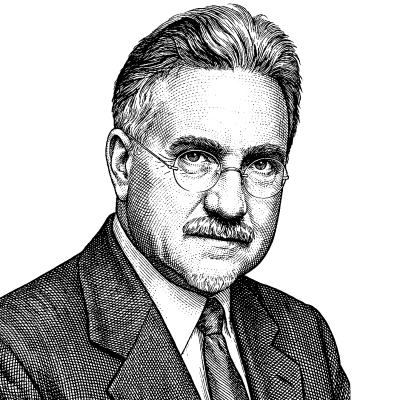
John A. Widtsoe
John Andreas Widtsoe (1872–1952) was a Norwegian-American scientist and apostle who brought a unique synthesis of scientific rigor and religious faith to his Church service. Born on an island among fisherfolk in Norway, he emigrated to Utah after his mother’s conversion. He graduated from Harvard with the highest honors and earned his doctorate from the University of Gottingen in Germany. Widtsoe became renowned for his expertise in irrigation and dry farming, serving as director of the Utah Agricultural Experiment Station and later as president of both Utah State Agricultural College and the University of Utah. He was called to the Quorum of the Twelve in 1921 and later served as president of the European Mission. A prolific author, Widtsoe wrote A Rational Theology and Evidences and Reconciliations , which addressed common questions about faith and doctrine. His marriage to Leah Dunford, granddaughter of Brigham Young, united him with a distinguished Church lineage. Despite personal tragedy, losing four of his seven children in infancy, he maintained a life of faithful service.
Quotations (32)
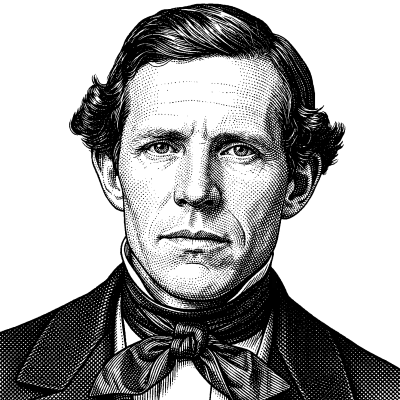 Joseph SmithJohn A. Widtsoe
 Brigham Young