agency
Articles (61)
Humanity+ and the Transhumanist Declaration
Explore the Transhumanist Declaration: a vision for enhancing human potential through technology while addressing risks, ethics, and the well-being of all sentience.
Transhumanist Advent: The Messianic Pattern
Explore the Messianic pattern of lifting others to godhood versus the Satanic pattern of self-exaltation, and what this means for transhumanist theology.
Transhumanist Advent: Greater Works Than These
Explore how Jesus's call to do "greater works than these" inspires active discipleship, challenging believers to emulate God's love using modern tools rather than passively adulate.
Translating Mormon Transhumanism
Explore how Mormon Transhumanism bridges faith and reason by translating religious concepts into universally accessible language, finding common ground between believers and agnostics.
The Prophetic Voice
Explore the broader meaning of prophecy beyond Church leadership, examining how the spirit of prophecy—rooted in testimony and feeling—applies to every believer's life.
Authors (45)
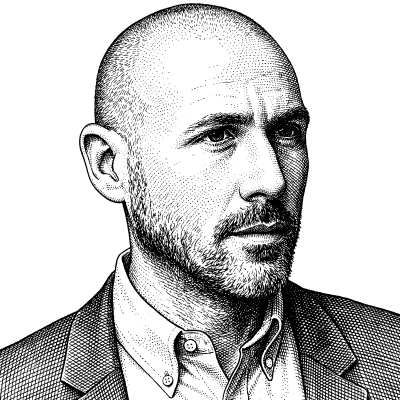
Adam Miller is a philosopher, educator, and author whose work serves as a bridge between contemporary continental philosophy and Latter-day Saint theology. He holds a bachelor’s degree from Brigham Young University and earned his master’s and PhD in philosophy from Villanova University. Miller currently serves as a professor of philosophy at Collin College in McKinney, Texas, where he also directs the college’s honors program. Miller is a leading voice in the “new Mormon theology” movement, characterized by a rigorous yet accessible approach to religious thought that often operates outside traditional institutional hierarchies. His scholarship draws heavily on the work of French philosophers such as Alain Badiou and Bruno Latour to re-examine Mormon metaphysics. In works like Speculative Grace: Bruno Latour and Object-Oriented Theology , Miller explores an “object-oriented” ontology, proposing a theological framework where grace and agency are embedded within the material relationships of the world—a perspective that resonates with discussions regarding the nature of matter and intelligence found within transhumanist discourse. A prolific writer, Miller has authored numerous influential books that challenge readers to engage deeply with scripture and tradition. His Letters to a Young Mormon is widely regarded for its candid and pastoral approach to questions of faith and agency. He has also produced a series of “urgent paraphrases” of biblical texts, including Grace Is Not God’s Backup Plan (Romans) and Nothing New Under the Sun (Ecclesiastes), which seek to unveil the tremendous power of ancient scripture for modern audiences. His engagement with secular culture is evident in The Gospel According to David Foster Wallace , a text praised by The New York Times for its “incantatory and gorgeous” prose. Beyond his writing, Miller has played a pivotal role in shaping the infrastructure of modern Mormon studies. He co-founded Salt Press, an independent publisher of Mormon theology later acquired by Brigham Young University’s Maxwell Institute. He also founded and serves as co-director of the Latter-day Saint Theology Seminar, an annual colloquium that fosters collaborative, close readings of scripture. Through these efforts, Miller has cultivated a space for rigorous theological experimentation, emphasizing a “theology of the present” that calls for active, transformative engagement with the divine in the here and now.

Augustine of Hippo
Aurelius Augustinus Hipponensis (354–430), commonly known as Augustine of Hippo or Saint Augustine, was a theologian, philosopher, and Bishop of Hippo Regius in Roman North Africa. He is widely regarded as one of the most influential figures in the development of Western Christianity and Western philosophy. Augustine's major works include Confessions , a pioneering spiritual autobiography, and The City of God , a monumental defense of Christianity against pagan criticism following the sack of Rome. His theological contributions shaped doctrines on original sin, divine grace, predestination, and the nature of the Trinity. Before his conversion to Christianity, he explored Manichaeism and Neoplatonism, and his synthesis of Christian doctrine with classical philosophy profoundly influenced medieval thought, the Protestant Reformation, and modern philosophy alike. Augustine's concept of deificatio (divinization) — the idea that humanity is called to participate in the divine nature — resonates with Mormon Transhumanist themes of theosis and the elevation of human potential. His emphasis on humanity's restless longing for God ("Our hearts are restless until they rest in You") speaks to a vision of human beings as fundamentally oriented toward transcendence. However, significant tensions exist between Augustine's theology and Mormon Transhumanist thought. Augustine's doctrine of original sin and total human depravity, his skepticism of unaided human will, and his emphasis on predestination stand in marked contrast to Latter-day Saint affirmations of human agency, moral capacity, and an optimistic anthropology. Additionally, Augustine's commitment to creatio ex nihilo and the absolute ontological distinction between Creator and creature diverges from Mormon theology's more materialist and continuity-oriented understanding of God and humanity. Nevertheless, Augustine's enduring call to seek wisdom, his insistence that faith and reason are complementary, and his vision of humanity's ultimate union with the divine ensure his lasting relevance to conversations at the intersection of faith, philosophy, and human flourishing.

Chelsea Shields is a biocultural anthropologist, TED Fellow, and researcher whose work explores the evolutionary foundations of religious belief and the physiological power of social connection. Raised in a Latter-day Saint family in Utah, she went on to earn dual PhDs in biological and cultural anthropology from Boston University in 2017. Shields’ academic research focuses on the concept of social susceptibility—how human bodies have evolved to be deeply responsive to social interaction and meaning-making. Over the course of a decade, she conducted extensive fieldwork with Asante indigenous healers in central Ghana, studying the evolution and elicitation of placebo and nocebo effects in ritual healing ceremonies. Her dissertation, “The Social Life of Placebos,” argues that grounding human behavior in social adaptations reveals important discoveries across placebo studies, religion, pain, stress, and empathy. She presented at the 2014 Conference of the Mormon Transhumanist Association on the evolutionary psychology of religion, examining how religious belief functions as a powerful biocultural force—shaping neural development, social bonding, and coping mechanisms—and how understanding these processes is essential for anyone thinking seriously about the future of the human brain and body. Shields is a three-time TED speaker, an advocate for gender equality within religious communities, and founder of Brandthropologie Agency, where she applies her research in social susceptibility and nonverbal communication to brand strategy and consumer research. She lives in Salt Lake City with her family.

Chris Benek is a pastor based in Miami, known for his engaging and sometimes controversial perspectives on religion and transhumanism. He is an active voice within the Mormon Transhumanist Association, advocating for a re-evaluation of the theological foundations guiding Christian transhumanist thought. Benek challenges the notion of a definitive, unchanging interpretation of the Bible, arguing that new information and evolving perspectives inevitably shape our understanding of scripture and our divine calling. He encourages a more nuanced approach to the relationship between faith, technology, and humanity’s potential for transformation. Acknowledging the limitations of language and the propensity for misinterpretation, Benek emphasizes the importance of open dialogue and personal engagement. He maintains an accessible online presence, inviting further discussion on these complex and evolving topics.
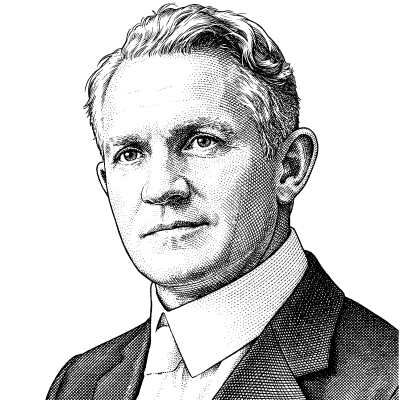
David O. McKay
David Oman McKay (1873–1970) served as the ninth president of The Church of Jesus Christ of Latter-day Saints from 1951 until his death. Born on his father’s farm in Huntsville, Utah, to Welsh and Scottish immigrant parents, he graduated as valedictorian from the University of Utah in 1897. He served as principal of Weber Academy and married Emma Ray Riggs in 1901. Ordained an apostle in 1906, McKay served as an active general authority for nearly 64 years, longer than anyone else in Church history. He was superintendent of Sunday Schools, the Church’s first Commissioner of Education, and counselor in the First Presidency to both Heber J. Grant and George Albert Smith before becoming Church President. Under McKay’s leadership, Church membership tripled from 1.1 million to 2.8 million. He traveled more miles than all previous Church presidents combined, emphasizing worldwide Church growth. His teachings are captured in famous mottos including “Every member a missionary” and “No success can compensate for failure in the home.”
Quotations (26)
 Joseph Smith
 Samuel Richards