harmonization
Articles (2)
Bridging Free Will and the Knowledge of God
Explore how quantum-inspired thinking reconciles free will with God's omniscience, replacing deterministic paradoxes with a dynamic probability wave of infinite possibilities.
Mormonism and Transhumanism: A match made in heaven
Discover why Mormonism and Transhumanism are a natural fit—both seek to overcome death and transcend mortality. Explore how science and faith unite in God's plan.
Authors (4)
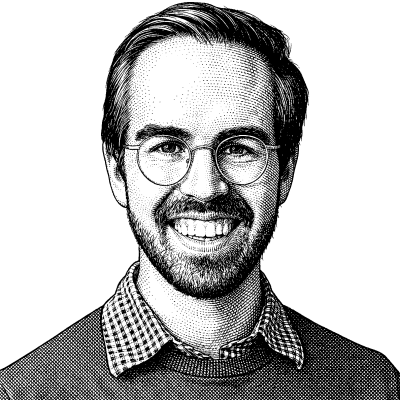
Jaxon Washburn is a Ph.D. student in Near Eastern Languages and Cultures with a focus on Armenian Studies at UCLA. He holds a Master of Theological Studies in History of Christianity from Harvard Divinity School (2023) and dual bachelor’s degrees in Religious Studies and History from Arizona State University (2021), both earned summa cum laude. Raised in an interfaith household, Jaxon has long been passionate about religious studies and interfaith activism, with early speaking engagements at venues including the Parliament of the World’s Religions and the United Nations. He formerly served as youth advisor for the Arizona Interfaith Movement and as a member of the Mormon Transhumanist Association. He went on to serve a mission for the Church of Jesus Christ of Latter-day Saints in Armenia—an experience that profoundly shaped the trajectory of his academic career. At Harvard Divinity School, Jaxon deepened his commitment to both scholarship and faith. He worked as a Research Associate with the Harvard Pluralism Project, contributing to efforts promoting religious literacy and interreligious engagement. His studies there also led to a published essay, “Mormonism: The Most American ‘Religious Other,’” in the Harvard Divinity Bulletin (Fall/Winter 2022). During his time at HDS, he developed a strong interest in Armenian religious history, studying Classical Armenian and working with Dr. Christina Maranci following the reestablishment of Harvard’s Mashtots Chair for Armenian Studies. Jaxon’s current research interests encompass the history of Christianity, Eastern and Armenian Christianity, mediums of interreligious exchange, and religious pluralisms in the South Caucasus. His earlier work on intersections between Hindu and Latter-day Saint traditions around themes of transfiguration and divine embodiment has broadened into a wider exploration of how religious communities interact, exchange, and develop across cultural boundaries.

Pierre Teilhard de Chardin
Pierre Teilhard de Chardin (1 May 1881 – 10 April 1955) was a French Jesuit priest, paleontologist, philosopher, and mystic whose synthesis of science and Christian faith profoundly influenced twentieth-century religious thought. Born in Auvergne, France, he was distantly related to both Voltaire and Blaise Pascal. Teilhard joined the Jesuit order in 1899 and was ordained to the priesthood in 1911. During World War I, he chose to serve as a stretcher bearer rather than a chaplain, earning the Legion of Honour for his courage. His paleontological work took him to China, where he participated in the 1929 discovery of Peking Man ( Homo erectus pekinensis ), establishing its geological era at approximately 750,000 years ago. His major works, The Divine Milieu and The Phenomenon of Man , written in the 1920s and ’30s, were forbidden publication during his lifetime by Jesuit authorities due to his evolutionary reinterpretation of Christian doctrine. Teilhard developed the concept of the Omega Point—a theorized future event toward which the universe spirals in increasing complexity and consciousness, which he identified with Christ. Along with Vladimir Vernadsky, he contributed to developing the concept of the noosphere—a sphere of human thought encircling the earth. Teilhard’s earth-affirming theology has grown in acceptance since his death, influencing Vatican II’s “The Church in the Modern World” and being cited by Pope Francis in Laudato si’ . His vision of cosmic evolution toward divine unity resonates deeply with transhumanist themes of human transformation and technological transcendence.

Shannon Avana is an artist, technologist, and visionary thinker whose work explores the intersections of human consciousness, digital identity, and the future of humanity. She gained significant recognition within the Mormon Transhumanist community following her presentation at the 2014 Religion and Transhumanism Conference. Bridging the “Quantified Self” movement with the theological concept of resurrection, she proposed that our digital footprints and biological data serve as modern precursors to a technologically mediated form of eternal life. Central to Avana’s philosophy is the belief that art is a vital tool for capturing an individual’s unique essence. While raw data maps our physical trajectories, she posits that creative expression captures the subjective experience, suggesting a path toward a “technological resurrection” where human complexity can be reconstructed from the archives we leave behind. As a practicing artist, Avana continues to explore how LDS theology—with its emphasis on eternal progression—harmonizes with advancements in biotechnology and artificial intelligence. Her legacy is defined by her ability to humanize technical concepts, viewing technology not as a cold, mechanical force, but as a medium for profound spiritual and personal expression.
Stephen L. Richards
Stephen L Richards (1879–1959) was a prominent leader in The Church of Jesus Christ of Latter-day Saints who served as a member of the Quorum of the Twelve Apostles for thirty-four years and as First Counselor in the First Presidency under President David O. McKay. A trained lawyer with a keen intellect, Richards was known for his thoughtful approach to reconciling religious faith with scientific understanding and his emphasis on the practical application of gospel principles. Born in Mendon, Cache County, Utah, Richards was the son of a local bishop and grandson of Willard Richards, an early apostle and church historian. He graduated from the University of Utah and the University of Chicago Law School, practicing law in Salt Lake City before his call to full-time church service. His legal training shaped his analytical approach to theological questions and church administration. Richards was ordained an apostle in 1917 at age thirty-seven. Over the following decades, he became known for addresses that addressed the relationship between science and religion with nuance and openness. He taught that if the evolutionary hypothesis of creation is ultimately found correct, the biblical account is sufficiently comprehensive to include the whole process. This perspective reflected his broader conviction that truth is truth, whether discovered through revelation or scientific inquiry. In 1951, when David O. McKay became church president, Richards was called as First Counselor in the First Presidency. He served in this capacity until his death eight years later. During this period, the church experienced significant growth and modernization. Richards contributed to efforts to professionalize church administration and expand its educational programs. Richards’s approach to faith and reason reflects themes central to Mormon transhumanist thought. His willingness to embrace scientific findings as compatible with religious truth, his emphasis on human agency and moral development, and his conviction that the gospel encompasses all truth anticipated later discussions about the harmony between religious and scientific worldviews. His teachings suggest that human progression—intellectual, moral, and spiritual—is central to the divine purpose.
Quotations (53)
 James E. Talmage
 Spencer W. Kimball
 John A. Widtsoe
 David O. McKay