evolution
Articles (13)
Mormon Naturalism
Explore how Mormon theology's unique naturalism—rejecting creation ex nihilo and a supernatural God—bridges faith and science, redefining divinity within natural law.
Transhumanist Advent: They did all eat, and were filled
Explore how modern agriculture and emerging technologies like genetic engineering and vertical farming echo Christ's miracle of multiplying loaves to feed the hungry.
Transhumanist Advent: Blood
Explore how Christ's call demands active responsibility—not passive comfort—challenging us to acknowledge the blood on our hands and do the work of healing others.
Transhumanist Advent: The Divine Ledger and Taking up the Cross
Explore how Christ's atonement calls us beyond abstract metaphysics to active compassion—healing wounds, ending oppression, and conquering death through present action.
Transhumanist Advent: On Claims
Explore how humanity holds a mutual claim with God—to diminish death and evil—in this Transhumanist Advent meditation on divine responsibility and human progress.
Authors (54)

Albert Einstein
Albert Einstein (1879–1955) was a German-born theoretical physicist widely regarded as one of the most influential scientists in human history. His contributions to physics fundamentally reshaped humanity’s understanding of space, time, energy, and the cosmos. Born in Ulm, in the Kingdom of Württemberg in the German Empire, Einstein developed the special and general theories of relativity, and his mass–energy equivalence formula, E = mc², has been called the world’s most famous equation. In 1921, he received the Nobel Prize in Physics for his discovery of the law of the photoelectric effect, a pivotal contribution to the development of quantum theory. Einstein held academic positions at the University of Zurich, Charles University in Prague, the Prussian Academy of Sciences, and, after emigrating to the United States in 1933, the Institute for Advanced Study in Princeton, New Jersey, where he remained until his death. Beyond his scientific achievements, Einstein was a profound philosophical thinker who often reflected on the relationship between science, mystery, and what he described as a “cosmic religious feeling.” He expressed deep reverence for the rational structure of the universe, once stating that “the most incomprehensible thing about the world is that it is comprehensible.” While not religiously orthodox, his sense of awe at the intelligibility of nature resonates with transhumanist and theological themes of humanity’s capacity to comprehend and participate in the divine order of creation. Einstein’s legacy speaks powerfully to the Mormon Transhumanist vision: his life exemplifies the extraordinary potential of the human mind to transcend prior limitations, to unveil deeper truths about reality, and to expand the horizon of what humanity can know and become.

Aubrey de Grey is a biomedical gerontologist based in Cambridge, United Kingdom, and Mountain View, California. He is recognized for his work in combating the aging process and is a frequent speaker at events focused on the intersection of science, ethics, and longevity. De Grey serves as the Chief Science Officer of SENS Research Foundation, a California-based nonprofit dedicated to developing and promoting therapies to reverse aging. He is also the Editor-in-Chief of Rejuvenation Research , a leading peer-reviewed journal focused on intervention in aging. De Grey is best known for developing Strategies for Engineered Negligible Senescence (SENS), a comprehensive plan for repairing the accumulating molecular and cellular damage that constitutes mammalian aging. SENS breaks aging down into seven major classes of damage and identifies detailed approaches to addressing each one.

Augustine of Hippo
Aurelius Augustinus Hipponensis (354–430), commonly known as Augustine of Hippo or Saint Augustine, was a theologian, philosopher, and Bishop of Hippo Regius in Roman North Africa. He is widely regarded as one of the most influential figures in the development of Western Christianity and Western philosophy. Augustine's major works include Confessions , a pioneering spiritual autobiography, and The City of God , a monumental defense of Christianity against pagan criticism following the sack of Rome. His theological contributions shaped doctrines on original sin, divine grace, predestination, and the nature of the Trinity. Before his conversion to Christianity, he explored Manichaeism and Neoplatonism, and his synthesis of Christian doctrine with classical philosophy profoundly influenced medieval thought, the Protestant Reformation, and modern philosophy alike. Augustine's concept of deificatio (divinization) — the idea that humanity is called to participate in the divine nature — resonates with Mormon Transhumanist themes of theosis and the elevation of human potential. His emphasis on humanity's restless longing for God ("Our hearts are restless until they rest in You") speaks to a vision of human beings as fundamentally oriented toward transcendence. However, significant tensions exist between Augustine's theology and Mormon Transhumanist thought. Augustine's doctrine of original sin and total human depravity, his skepticism of unaided human will, and his emphasis on predestination stand in marked contrast to Latter-day Saint affirmations of human agency, moral capacity, and an optimistic anthropology. Additionally, Augustine's commitment to creatio ex nihilo and the absolute ontological distinction between Creator and creature diverges from Mormon theology's more materialist and continuity-oriented understanding of God and humanity. Nevertheless, Augustine's enduring call to seek wisdom, his insistence that faith and reason are complementary, and his vision of humanity's ultimate union with the divine ensure his lasting relevance to conversations at the intersection of faith, philosophy, and human flourishing.

B. H. Roberts
Brigham Henry Roberts (1857–1933) was an English-born Latter-day Saint leader, historian, theologian, and politician who became one of Mormonism’s foremost intellectuals. He served as a member of the First Council of the Seventy for nearly five decades and produced foundational works of Church history and theology that shaped Latter-day Saint scholarship throughout the twentieth century. Born into poverty in Warrington, Lancashire, England, Roberts’s childhood was marked by hardship. His father struggled with alcoholism and gambling, leading Roberts to later describe his early years as “a nightmare” and “a tragedy.” After both parents converted to the Church in 1857, his mother emigrated to Utah in 1862, leaving young Roberts in England. In 1866, at age nine, he walked much of the way across the plains—often barefoot—to reach Salt Lake City and reunite with his family. Roberts graduated first in his class from the University of Deseret (now the University of Utah) in 1878. He served multiple missions, including as president of the Southern States Mission beginning in 1883. During this assignment, he faced the tragedy of the Cane Creek Massacre in 1884, personally recovering the bodies of two murdered missionaries while disguised to protect his identity. Like many Latter-day Saint men of his era, he served prison time for practicing plural marriage. In 1888, Roberts became one of the seven presidents of the First Council of the Seventy, the Church’s third-highest governing body, a position he held until his death. He also served as Assistant Church Historian from 1902 to 1933. Elected to the U.S. House of Representatives in 1898, Congress denied him his seat due to national concerns about polygamy—a pivotal moment in early twentieth-century political history. Roberts’s scholarly output was prodigious. He edited the seven-volume History of the Church of Jesus Christ of Latter-day Saints and independently authored the six-volume Comprehensive History of the Church . His theological masterwork, The Truth, the Way, and the Life , remained unpublished during his lifetime due to debates with Church leadership over his assertions regarding earth’s age and organic evolution. A “defender of the faith,” he argued that religious truth could withstand rigorous academic examination, contributing to the development of Mormon apologetics while maintaining intellectual honesty about challenges to faith.

Benjamin Franklin
Benjamin Franklin (January 17, 1706 – April 17, 1790) was an American polymath, statesman, scientist, inventor, writer, printer, philosopher, and Founding Father of the United States. Among the most influential intellectuals of the Enlightenment, Franklin earned the title “The First American” for his tireless advocacy of colonial unity and his diplomatic efforts to secure French support during the American Revolution. Born in Boston, Massachusetts, Franklin received only two years of formal schooling before beginning work in his father’s candlemaking shop. At age twelve, he became an apprentice to his brother James, a printer, where he developed his love of reading and writing. By age seventeen, he had run away to Philadelphia, where he would build his fortune and reputation. Franklin’s scientific contributions were remarkable. His experiments with electricity, including the famous kite experiment, established the nature of lightning and led to the invention of the lightning rod. He also invented bifocal glasses, the Franklin stove, and the glass armonica. His curiosity extended to oceanography, meteorology, and demography. As a civic leader, Franklin founded the American Philosophical Society, the first lending library, the University of Pennsylvania, and the first fire department in Philadelphia. His wit and wisdom, expressed through Poor Richard’s Almanack, shaped American culture for generations. Franklin’s vision of human progress through science and reason resonates strongly with transhumanist thought. His belief that future generations would master nature, extend human life, and achieve powers beyond imagination prefigured modern discussions of technological enhancement and human flourishing.
Quotations (20)
 James E. Talmage
 David O. McKay
 Spencer W. KimballDavid O. McKay
Videos (2)
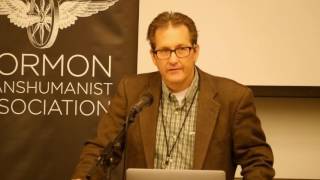
Steven Peck
The Evolution of Novelty in an Open Universe: Requiem for Laplace's Demon
Steven Peck challenges the deterministic "block universe" of Laplace's demon, arguing that genuine randomness—rooted in quantum events—bubbles up through biology to create an open, evolving cosmos. Drawing on chaos theory, emergence, and evolutionary biology, he contends that novelty is continuously generated in ways that were never predetermined at the Big Bang. For Peck, this openness has profound theological implications: if God has an embodied, biological nature, then faith, hope, and charity are not merely earthly virtues but eternal necessities for navigating a universe where the future remains genuinely unwritten.
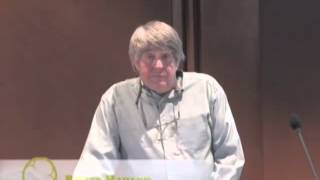
Three Spiritual Exemplars for Religious Transhumanists
Roger Hansen examines the lives and ideas of three early twentieth-century thinkers—John A. Widtsoe, Alfred North Whitehead, and Pierre Teilhard de Chardin—whose work offers valuable insights for religious transhumanists. Drawing on their shared beliefs in evolutionary progress, the interconnectedness of life, and the compatibility of science and religion, Hansen argues that these "spiritual exemplars" provide a theological foundation for eternal progression and the ongoing technological revolution. He suggests that Widtsoe's commitment to reconciling LDS theology with science, Whitehead's process philosophy, and Teilhard's vision of humanity evolving toward an "Omega Point" all resonate deeply with Mormon transhumanist aspirations.