resurrection
Articles (14)
Transhumanist Advent: The Messianic Pattern
Explore the Messianic pattern of lifting others to godhood versus the Satanic pattern of self-exaltation, and what this means for transhumanist theology.
Transhumanist Advent: Jesus and the Anti-Christ
Explore how Jesus as model calls humanity to action rather than passivity—a provocative Transhumanist Advent meditation on responsibility, hope, and becoming.
Transhumanist Advent: Christ as Invitation
Explore how Christ's life exemplifies a radical, ongoing invitation to expand morality and co-create a better world—a vision where transhumanism and Advent converge.
Transhumanist Advent: She is not dead but sleepeth
Explore how Christ's raising of the dead foreshadows modern medicine's blurring of life and death—from cryonics to CPR—through a Mormon Transhumanist lens.
The Sacred Road to the Stars
Giulio Prisco reflects on the long, inspiring journey to the stars—blending space exploration, patience, and sacred wonder as humanity takes its first steps beyond Earth.
Authors (10)

Cyprian
Cyprian of Carthage (c. 210–258 AD) was a bishop and early Christian writer who played an important role in developing Christian thought on the nature of the Church and the role of bishops. Born to a wealthy pagan family in North Africa, Cyprian converted to Christianity around 246 AD and was elected bishop of Carthage just two years later. During the Decian persecution, he went into hiding but continued to lead his community through letters. His writings address church unity, the validity of sacraments, and the process by which humans may become like God. He taught that Christ became what man is so that man may also become what Christ is—a clear articulation of the deification theme. Cyprian was martyred during the Valerian persecution in 258 AD.

George Q. Cannon
George Quayle Cannon (1827–1901) was one of the most influential leaders in the early history of The Church of Jesus Christ of Latter-day Saints, serving as a member of the Quorum of the Twelve Apostles and later as First Counselor in the First Presidency under four successive church presidents. A skilled orator, prolific publisher, and astute politician, Cannon shaped the church’s public image and theological discourse during a critical period of its development. Born in Liverpool, England, Cannon immigrated to the United States with his family at age fifteen following their conversion to the LDS faith. After his parents’ deaths, he was raised by his uncle John Taylor, who would later become the third president of the church. Cannon crossed the plains to Utah in 1847 and soon demonstrated exceptional abilities as a writer and leader. In 1849, he was called on a mission to California, and later served in Hawaii, where he learned the Hawaiian language and translated the Book of Mormon into Hawaiian. Cannon’s publishing career began in San Francisco, where he edited the Western Standard. Returning to Utah, he founded the Deseret News and later established the Juvenile Instructor magazine. He served as editor of the Millennial Star in England and built a publishing empire that produced books, pamphlets, and periodicals defending and explaining Latter-day Saint beliefs. His editorials and writings helped articulate church doctrine on subjects ranging from plural marriage to the nature of God. In 1860, Cannon was ordained an apostle at age thirty-two. He also served six terms as Utah’s delegate to the U.S. Congress (1872–1882), where he advocated for Utah statehood while defending the church against anti-polygamy legislation. Though he was eventually denied his congressional seat due to polygamy charges, his political experience proved invaluable to church leadership during the difficult years of federal prosecution. Cannon’s theological contributions reflect themes resonant with transhumanist thought. He taught extensively about human deification and eternal progression, declaring that ‘the object of man’s existence is that he might become like God.’ He envisioned humanity’s potential for infinite development and wrote of the transformative power of knowledge and technology in advancing God’s purposes. His writings on the resurrection emphasized the perfection and glorification of the human body—ideas that anticipate contemporary discussions of human enhancement and transcendence.

Hippolytus
Hippolytus of Rome (c. 170–235 AD) was one of the most important early Christian theologians. His writings include commentaries on Scripture and theological treatises on the nature of Christ and human deification. Hippolytus was a disciple of Irenaeus and became a leading theologian in Rome. His Refutation of All Heresies is a major source for understanding early Christian debates. He taught that God could have made humans gods from the beginning, but instead offered them the opportunity to become gods through obedience and faithfulness. Though he initially opposed Pope Callixtus and was considered an antipope, Hippolytus was later reconciled with the Church and died as a martyr, exiled to Sardinia during the persecution of Maximinus Thrax.
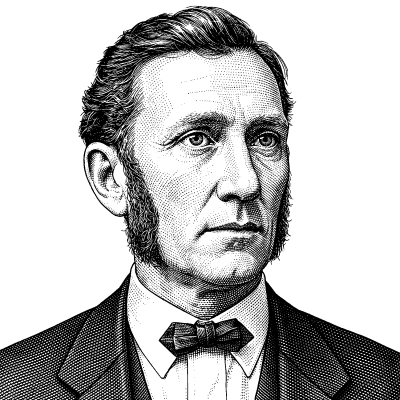
Joseph F. Smith
Joseph Fielding Smith (1838–1918) was the 6th President of The Church of Jesus Christ of Latter-day Saints, serving from 1901 until his death. He was the son of Hyrum Smith and nephew of Joseph Smith. Born in Far West, Missouri, Joseph F. Smith experienced the trials of early Church history firsthand. As a young child, he witnessed the aftermath of the Carthage martyrdom. At age nine, he drove an ox team across the plains to Utah with his widowed mother. At fifteen, he was called on a mission to Hawaii, where he had a transformative vision of the afterlife. He taught that Jesus’s work was not finished with his death and resurrection but continues until all who can be saved are redeemed. This expansive vision of salvation includes work for the dead and the promise that the faithful become saviors on Mount Zion alongside Christ.

Maximus the Confessor
Maximus the Confessor (c. 580–662 AD) was a Christian monk, theologian, and scholar who developed sophisticated theology of theosis, teaching that humanity is destined to participate in the divine nature through Christ. Born to a noble Byzantine family, Maximus initially served as a court secretary before becoming a monk. He became the leading opponent of Monothelitism, the doctrine that Christ had only one will, arguing instead that Christ has both divine and human wills. His theological writings explore how God became the Son of Man so that humans might become sons of God. Maximus taught that through the Incarnation, Christ makes possible the deification of humanity without the loss of human identity. For his opposition to imperial theology, he was tried, mutilated (his tongue and right hand cut off), and exiled, dying shortly after in 662 AD.
Quotations (28)
 David O. McKay
Videos (4)
Giulio Prisco
How to Bring Eduardo Back to Life
Giulio Prisco explores the speculative physics and technology that might one day enable the resurrection of the dead, using his ancestor Eduardo Scarpeta as a personal example. Drawing on concepts from string theory, higher-dimensional physics, and the film Interstellar, he imagines future beings with access to the fourth spatial dimension who could scan information from the past and restore individuals to life. Prisco frames technological resurrection not as imminent but as a far-future possibility—one that invites hope rather than passive waiting, much like early science fiction inspired the eventual reality of space travel.
Mike Perry
An Alternative to Quantum Archaeology in Resurrecting the Dead
Mike Perry, a longtime cryonicist and author of Forever for All, proposes "parallel recreation" as an alternative to quantum archaeology for resurrecting the dead. While quantum archaeology attempts to retrodict the exact positions of atoms throughout history—an approach Perry finds implausible given quantum uncertainty—his method accepts some loss of historical information while still achieving meaningful resurrection through "informed guesswork." Drawing on multiverse theory and an informational view of reality where identical copies are distributed across infinite universes, Perry argues that recreating persons consistent with surviving historical records would yield authentic versions of those who once lived. He views cryonics as the preferable path, allowing one to be a benefactor in future resurrection efforts rather than merely a beneficiary.
Lincoln Cannon
The Consolation: An Adaptation of the King Follett Sermon of Joseph Smith
Lincoln Cannon adapts Joseph Smith's King Follett Sermon for a transhumanist age, offering consolation to those mourning the loss of loved ones. He argues that God was once as we are now and became posthuman through the same creative process we ourselves may follow. Information, like matter and energy, is eternal and cannot be created from nothing or annihilated—our dead persist in the causal fabric of reality, awaiting resurrection through the work of compassionate creators. Cannon calls for a synthesis of ritual and engineering: sacraments without technology are impotent, while technology without meaning is empty.
Mike Perry
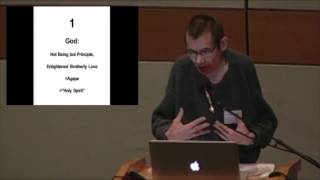
Christian Atheist Universal Immortalism
Mike Perry presents “Christian Atheist Universal Immortalism,” a philosophy combining the ethical framework of Christianity—enlightened brotherly love—with the belief that death can be overcome through scientific means rather than supernatural intervention. Perry argues that while Christian atheism provides a satisfying moral framework, it remains “deathist” in its acceptance of mortality; universal immortalism adds the commitment that all sentient beings should eventually gain salvation and eternal life through technological means such as cryonics. He views Jesus as a pioneer transhumanist immortalist whose command to “heal the sick and raise the dead” should be taken literally as our technology advances, and proposes that resurrection may be achieved through his “minibodies” theory rather than quantum archaeology, acknowledging that information may be irretrievably lost but that multiple authentic timelines could still be realized.