revelation
Articles (11)
The Prophetic Voice
Explore the broader meaning of prophecy beyond Church leadership, examining how the spirit of prophecy—rooted in testimony and feeling—applies to every believer's life.
Transhumanist Advent: He maketh the deaf to hear
Explore how Christ's miraculous healing of the deaf connects to modern technology, revealing how restoring hearing through innovation emulates the compassionate works of Jesus.
Bridging Free Will and the Knowledge of God
Explore how quantum-inspired thinking reconciles free will with God's omniscience, replacing deterministic paradoxes with a dynamic probability wave of infinite possibilities.
“Unto what shall I liken?” - Breaking the Fourth Wall of Revelation
Explore how semiotics and "breaking the fourth wall" in scripture reveal the evolving nature of religious language, self-awareness, and divine revelation in Mormon thought.
Applying The Gospel Algebra
Explore how algebraic logic reveals potential flaws in LDS policy reasoning, offering a charitable framework for dialogue about faith, Christ-like discipleship, and same-sex family policies.
Authors (5)

Don Bradley is an American historian specializing in the origins of the Latter-day Saint movement and the early history of the Book of Mormon. His meticulous archival research and innovative historical methodology have shed new light on some of the most intriguing questions surrounding the founding events of Mormonism. He is best known for his groundbreaking work reconstructing the lost 116 pages of the Book of Mormon manuscript. Bradley ’ s book The Lost 116 Pages: Reconstructing the Book of Mormon's Missing Stories (2019) represents years of detective work piecing together what the lost manuscript likely contained. Using contemporary accounts, textual analysis, and historical context, Bradley reconstructed the narrative of Lehi and his family that was contained in the Book of Lehi—the portion translated by Joseph Smith and lost by Martin Harris in 1828. His work has been widely praised for its scholarly rigor and its contributions to understanding early Mormon history. Bradley’s faith journey has been marked by both departure and return. After leaving The Church of Jesus Christ of Latter-day Saints, he found his way back to faith in part through the influence of the Mormon Transhumanist Association, whose integration of religious belief with rational inquiry resonated with his scholarly temperament. Lincoln Cannon, founder and first president of the MTA, performed Bradley’s rebaptism—a meaningful connection between his intellectual and spiritual homecoming. Bradley has spoken openly about how his historical research, rather than undermining his faith, ultimately contributed to his decision to return. Bradley has presented his research at numerous academic conferences, including the Mormon History Association and FairMormon. He has contributed to scholarly journals and collaborative volumes on Latter-day Saint history. His work on the lost pages has influenced how scholars understand the structure and content of the Book of Mormon, as well as the translation process Joseph Smith employed. His research touches on themes relevant to transhumanist thought, particularly regarding the nature of knowledge, the recovery of lost information, and the relationship between faith and empirical inquiry. Bradley’s methodology demonstrates how careful scholarship can illuminate religious origins while respecting the complexity of belief—a model for integrating scientific and spiritual approaches to understanding human experience and potential.
Joseph Smith
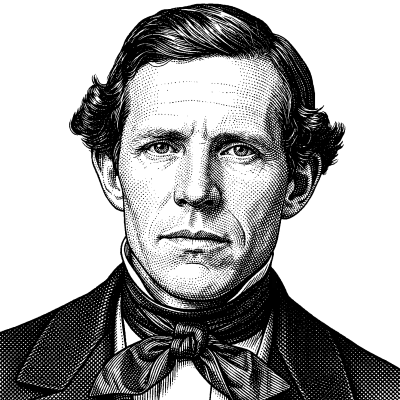
Joseph Smith was born on December 23, 1805, in the quaint town of Sharon, Vermont. Emerging from humble beginnings, he would grow to become a prominent figure in American religious history. Joseph’s early years were characterized by an insatiable quest for spiritual truth, set against the backdrop of the Second Great Awakening. In the spring of 1820, at the tender age of 14, he experienced a miraculous visitation in which he beheld God the Father and Jesus Christ. This profound encounter set in motion a series of divinely orchestrated events, culminating in the translation of the golden plates and the subsequent publication of the Book of Mormon . Joseph’s steadfast commitment to his divine mission resulted in the founding of The Church of Jesus Christ of Latter-day Saints in 1830, marking the beginning of a new religious movement. Throughout his life, Joseph Smith faced tremendous challenges, including relentless persecution, violent mob actions, and unjust imprisonment. Despite these trials, he demonstrated remarkable resilience, guiding the Saints through adversity from Ohio to Missouri, and ultimately to the thriving community of Nauvoo, Illinois. In Nauvoo, he fostered a vibrant society, articulating profound doctrines about the eternal nature of families and the limitless potential of the human soul. Tragically, his life was cut short when he was martyred on June 27, 1844, in Carthage, Illinois. Despite his untimely death, Joseph Smith’s legacy endures, with millions of Latter-day Saints worldwide continuing to embrace the faith he restored.

Samuel Richards
Samuel Whitney Richards (1824–1909) was an early Latter-day Saint leader who served missions to Great Britain and held various church callings throughout his life. His contributions to the Millennial Star and other publications explored the nature of prophets and revelation. He taught about the continuity of prophetic gifts and the importance of personal spiritual experience in understanding divine truth. Richards was part of the generation that helped establish the Church in the Mountain West and contributed to the theological development of Latter-day Saint thought on ongoing revelation.
Spencer W. Kimball
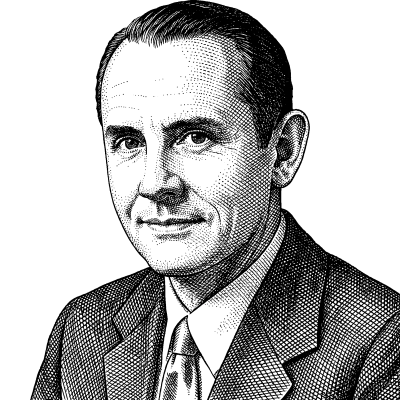
Spencer Woolley Kimball (March 28, 1895 – November 5, 1985) was the twelfth president of The Church of Jesus Christ of Latter-day Saints, serving from 1973 until his death. A grandson of Heber C. Kimball, one of the original apostles called in 1835, Spencer was born in Salt Lake City, the sixth of eleven children. When he was three years old, his family moved to Thatcher, Arizona, where his father served as stake president. His mother died when he was eleven, and his childhood was marked by health challenges including typhoid fever and facial paralysis. After serving a mission in the central United States, Kimball married Camilla Eyring in 1917 and worked in banking, insurance, and real estate. In 1943, at age 48, he was called to the Quorum of the Twelve Apostles, where he served for thirty years with special assignments to Native American communities. His ministry was marked by remarkable resilience: throat cancer in 1957 required surgery that removed one vocal cord, leaving him with a distinctive soft, gravelly voice, and he underwent open-heart surgery in 1972 performed by future church president Russell M. Nelson. Despite becoming church president at age 78, Kimball led with extraordinary energy, embodied in his mottos “Do It!” and “Lengthen Your Stride.” Under his leadership, missionary numbers more than doubled. Most significantly, in June 1978, he announced Official Declaration 2, extending priesthood ordination to all worthy male members regardless of race—a revelation he described as coming after prolonged prayer in the Salt Lake Temple. He also added two revelations to the scriptural canon, reorganized the First Quorum of the Seventy, and expanded the number of operating temples from fifteen to thirty-one. Kimball’s leadership demonstrated that transformation remains possible regardless of age or physical limitation. His life exemplified the Latter-day Saint belief in eternal progression—the conviction that human beings are capable of infinite growth and eventual godhood through divine grace and persistent effort.

Wilford Woodruff
Wilford Woodruff (1807–1898) served as the fourth president of The Church of Jesus Christ of Latter-day Saints from 1889 until his death. Born in Connecticut, he worked as a miller before joining the Church in 1833. He was ordained an apostle in 1839 and served a remarkably successful mission in England, leading many converts to Nauvoo. Woodruff’s journals constitute one of the most valuable records in Latter-day Saint history, documenting decades of Church development. In 1890, after receiving revelation, he issued the Manifesto that ended the practice of plural marriage, helping to resolve the conflict with the U.S. government that had plagued the Church for decades. His presidency saw the 1893 dedication of the Salt Lake Temple and Utah’s 1896 admission to statehood. He founded the Genealogical Society of Utah and directed the first mission calls to single women, opening a new era of sister missionary service. He died in San Francisco on September 2, 1898.
Quotations (17)

 Brigham Young
 Joseph Smith