prophecy
Articles (7)
The Prophetic Voice
Explore the broader meaning of prophecy beyond Church leadership, examining how the spirit of prophecy—rooted in testimony and feeling—applies to every believer's life.
Transhumanist Advent: Jesus and the Anti-Christ
Explore how Jesus as model calls humanity to action rather than passivity—a provocative Transhumanist Advent meditation on responsibility, hope, and becoming.
A Transhumanist Advent
Explore 25 Advent meditations from Mormon Transhumanist thinkers reflecting on Christ, technology, theosis, and humanity's calling to do "greater works" this Christmas.
What the Serpent Wrought
Explore a powerful poetic meditation on pain, separation, and rebirth—where the serpent's legacy transforms agony into the miraculous arrival of new life.
Mormonism and the Fractal Lineage of Gods
Explore how fractal geometry illuminates Mormon theology's eternal lineage of gods, creation, and cosmology—expanding Joseph Smith's circle symbolism into infinite, self-similar patterns.
Authors (12)

David A. Bednar
David Allan Bednar (born 1952) is an American religious leader who has served as a member of the Quorum of the Twelve Apostles of The Church of Jesus Christ of Latter-day Saints since 2004. Born in Oakland, California, Bednar earned a PhD in organizational behavior from Purdue University. He served as president of Brigham Young University-Idaho from 1997 to 2004, overseeing significant innovations in higher education including year-round enrollment and online learning initiatives. His teachings emphasize covenant-making, the role of technology in hastening the Lord’s work, and the connection between generations in family history work. He has spoken about how hearts turning to family history reflects the prophesied work of Elijah.
Heber C. Kimball
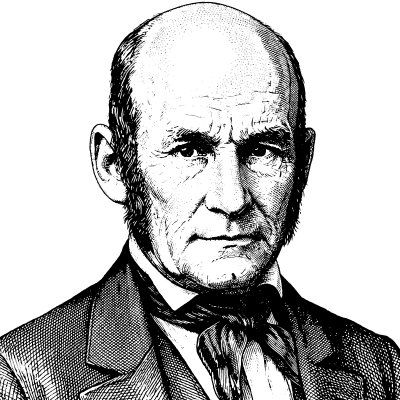
Heber Chase Kimball (1801–1868) was one of the original members of the Quorum of the Twelve Apostles and later served as first counselor to Brigham Young in the First Presidency for over twenty years. Born in Vermont, he learned the potter’s trade from his brother and joined the Church in 1832 after hearing the preaching of missionaries. In 1837, Joseph Smith called Kimball to lead the first LDS missionary effort in England. Beginning in Preston, Lancashire, the mission baptized about 1,500 converts before Kimball’s departure in 1838. This established a pattern of missionary work that would bring thousands of British converts to the Church in subsequent decades. A physically impressive man and powerful speaker, Kimball was known for his faith and devotion. When the First Presidency was reorganized in 1847, Brigham Young chose him as first counselor, a position he held until his death in 1868. At Kimball’s funeral, Young remarked that he had known him for 43 years.

Hugh B. Brown
Hugh Brown Brown (1883–1975) was an attorney, educator, and Church leader who served in the First Presidency under President David O. McKay. Born in Granger, Utah, his family moved to Alberta, Canada, when he was fifteen. He served a mission in England from 1904 to 1906 and later married Zina Young Card, granddaughter of Brigham Young. Brown had a distinguished career before his general authority service, including military leadership in World War I, serving as president of the British Mission during World War II, and working as LDS Servicemen’s Coordinator. He joined BYU’s faculty in 1946 as a professor of religion. Called as an apostle in 1958 at age 74, Brown served as a counselor in the First Presidency from 1961 to 1970. He was known as a talented speaker and favored rescinding the Church’s priesthood restriction before it was changed in 1978. His address “The Profile of a Prophet” remains widely quoted for its articulation of the nature of prophetic authority.

John Taylor
John Taylor (1808–1887) served as the third president of The Church of Jesus Christ of Latter-day Saints from 1880 until his death. Born in Milnthorpe, England, he immigrated to Canada in 1832 and converted to the Church in 1836. Known as the “Champion of Liberty,” he edited several Church publications and served multiple missions to England and France. Taylor was present in Carthage Jail when Joseph and Hyrum Smith were martyred in 1844. Shot five times, he survived and was thereafter known as a “living martyr.” He is remembered for singing “A Poor Wayfaring Man of Grief” at Hyrum’s request shortly before the attack. As Church President, Taylor led the Saints during intense federal persecution over plural marriage. The Edmunds Act of 1882 forced him into hiding for the last years of his life, during which he established colonies of refuge in Mexico and Canada. He died on July 25, 1887, still maintaining his convictions about religious liberty.
Joseph F. Smith
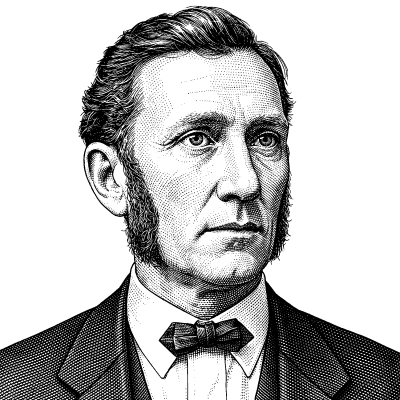
Joseph Fielding Smith (1838–1918) was the 6th President of The Church of Jesus Christ of Latter-day Saints, serving from 1901 until his death. He was the son of Hyrum Smith and nephew of Joseph Smith. Born in Far West, Missouri, Joseph F. Smith experienced the trials of early Church history firsthand. As a young child, he witnessed the aftermath of the Carthage martyrdom. At age nine, he drove an ox team across the plains to Utah with his widowed mother. At fifteen, he was called on a mission to Hawaii, where he had a transformative vision of the afterlife. He taught that Jesus’s work was not finished with his death and resurrection but continues until all who can be saved are redeemed. This expansive vision of salvation includes work for the dead and the promise that the faithful become saviors on Mount Zion alongside Christ.
Quotations (13)

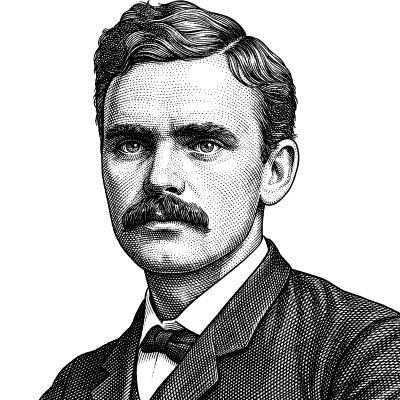 B. H. Roberts
 Joseph Smith