accelerating change
Articles (5)
Exponential Change
Explore how exponential change reshapes our world at an accelerating pace, why Moore's Law reflects human vision, and what understanding exponential progress means for our future.
A Primer Primer
Discover the Mormon Transhumanist Association's Primers—short, accessible introductions to key ideas in Mormon Transhumanism, designed for meetups, conversations, and curious minds of all ages.
Technological Funemployment
Explore why technological unemployment is more myth than reality. Discover how automation historically creates new, safer, and more interesting jobs rather than eliminating work.
Transhumanist Advent: Jesus and the Anti-Christ
Explore how Jesus as model calls humanity to action rather than passivity—a provocative Transhumanist Advent meditation on responsibility, hope, and becoming.
The High Frontier 2015
Explore how competing worldviews of scarcity and abundance shape humanity's technological progress, and why motivation to use resources may determine our future on the high frontier.
Authors (5)

James Carroll is a speaker and thinker focused on the drivers of technological progress and their implications for the future. He presented at the MTAConf 2014, examining the rate of technological change and questioning whether it is linear or exponential. His 2014 presentation sought to temper overly confident singularitarian views, such as those proposed by Raymond Kurzweil, suggesting that an exponential trajectory was uncertain at best. Building on his previous work, Carroll’s subsequent research has extended the discussion to include additional paradigms for innovation, specifically invention and specialization, trade, and the economics of scale (referred to as the ‘scale’ paradigm). He explores the relationships between these paradigms and population growth, arguing that technology impacts population size by enabling larger populations through advances in food production, reduced epidemics, and lower infant mortality rates. Carroll’s work considers both the impact of technological progress on society, and the societal factors that drive innovation. He argues that understanding these forces is crucial for assessing the potential for transhumanist visions to be realized, and for navigating the future of humanity in a rapidly changing world.
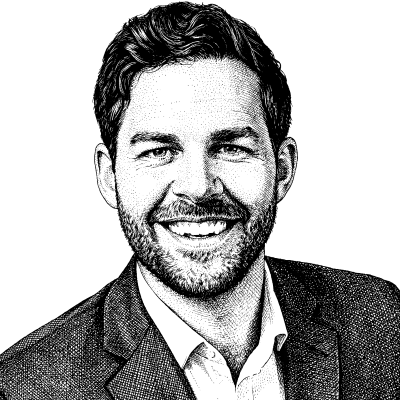
Kurtis Lockhart is an urban development leader, researcher, and the Founder and Director of the Africa Urban Lab (AUL). He holds a PhD in political science from the University of Oxford, where his research examined the impact of institutional reforms on public goods provision in sub-Saharan Africa. He also obtained an MSc in Development Management from the London School of Economics—where he graduated top of his class—and a BA in Economics and Development Studies from McGill University. While at Oxford, he taught both quantitative methods and African politics, seamlessly bridging rigorous academic theory with real-world development challenges. Before focusing on urban innovation, Lockhart built extensive on-the-ground expertise managing developmental research and randomized control trials. He served as a Research Manager for the International Growth Centre and Warc Africa in Sierra Leone, and for the ELIMU Impact Evaluation Center in Kenya. These early roles across varied sectors solidified his understanding of the complex bottlenecks facing developing regions and underscored the urgent need for scalable, structural solutions. A prominent advocate for innovative governance, Lockhart previously served as Executive Director and Head of Research at the Charter Cities Institute (CCI), a Washington, D.C.-based think tank. There, he championed the development of charter cities—new urban centers granted special jurisdiction to enact institutional reforms—as a mechanism to address Africa’s rapid urbanization. Expanding on this mission in 2024, he launched the Africa Urban Lab in Zanzibar. Operating as a “teaching hospital” for urban professionals in partnership with the African School of Economics and CCI, AUL trains the next generation of municipal leaders and planners to transform urban growth into economic prosperity. Lockhart’s broader vision aligns deeply with themes of human progress, emphasizing how institutional evolution can lift communities out of poverty and foster long-term resilience. At the MTAConf 2022, he made a presentation on Charter Cities: Empowered Cities for the Urban Age, illustrating how decentralized, empowered cities can overcome traditional development hurdles. By reimagining city governance as a catalyst for human flourishing, Lockhart continues to shape the future of urban resilience and economic freedom across the Global South.

Ray Kurzweil
Raymond Kurzweil , born February 12, 1948, in Queens, New York, is an American inventor, futurist, and author who has been described as “the restless genius” by The Wall Street Journal. He graduated from MIT in 1970 with degrees in computer science and literature. Kurzweil is the principal inventor of numerous groundbreaking technologies, including the first CCD flatbed scanner, omnifont optical character recognition, the first printtospeech reading machine for the blind, the first texttospeech synthesizer, and commercially marketed largevocabulary speech recognition software. He has received the National Medal of Technology, was inducted into the National Inventors Hall of Fame, and holds 21 honorary doctorates. Kurzweil is best known for his writings on the technological singularity—the predicted moment when artificial intelligence will surpass human intelligence, leading to unprecedented transformation. His influential book The Singularity Is Near (2005) articulates his vision of humanity’s merger with technology, predicting this transformation will occur around 2045. Currently serving as a Principal Researcher and AI Visionary at Google, Kurzweil continues to shape our understanding of exponential technological change and its implications for human potential, making his work foundational to transhumanist philosophy.

Robin Hanson is an economist and researcher known for his work on topics ranging from prediction markets and signaling theory to the potential societal impacts of future technologies, particularly artificial intelligence. His work often involves applying economic principles to understand and forecast long-term trends in growth and technological development. He is known for taking a 'big picture’ approach to history, studying the history of the human economy over long timescales. Hanson’s presentations often explore the possibility of dramatic future economic transformations driven by advances in AI and automation. He examines historical patterns of exponential growth, suggesting that the rate of growth is accelerating, and that this acceleration could lead to massive changes in the economy. He believes artificial intelligence represents a major possibility. He was formerly an AI researcher and asks AI researchers about how far we have come in the last 20 years. His analyses provoke discussions about the future of work, the nature of intelligence, and the potential consequences of technological singularity.

William Gibson
William Ford Gibson , born March 17, 1948, in Conway, South Carolina, is an American-Canadian speculative fiction writer widely credited with pioneering the cyberpunk genre. After dropping out of high school and traveling to Canada, he earned a B.A. from the University of British Columbia in 1977. Gibson coined the term “cyberspace” in his 1982 short story “ Burning Chrome ” and popularized the concept in his groundbreaking debut novel Neuromancer (1984), which remains the only novel to win the Hugo, Nebula, and Philip K. Dick Awards. His visionary works anticipated the Internet, virtual reality, and the pervasive digital culture that defines modern life. Gibson’s Sprawl trilogy— Neuromancer , Count Zero (1986), and Mona Lisa Overdrive (1988)—merged technology, multinational corporate capitalism, and vast urban landscapes in ways that revolutionized science fiction. His influence extends far beyond literature, inspiring films like The Matrix and shaping how we understand the relationship between humanity and technology. Gibson continues to write and lives in Vancouver, British Columbia, exploring themes of technological change and human adaptation that resonate deeply with transhumanist thought.
Quotations (11)
 John A. Widtsoe
 Pierre Teilhard de Chardin
 Gordon B. Hinckley
 David O. McKay
 B. H. Roberts