intelligence
Articles (8)
The Gospel of Tron
Explore the spiritual parallels between programming, creation, and Mormon theology—how creative processes mirror divine emergence and draw us closer to understanding God and eternity.
Michael LaTorra explains Buddhist Transhumanism in a nutshell
Discover how Buddhist Transhumanism merges ancient wisdom with modern technology, seeking to reduce suffering and achieve Awakening through science—as explained by Zen priest Michael LaTorra.
A Cosmic Mind
Explore how faith and science converge in the idea of a Cosmic Mind, connecting Pascal's paradox, Mormon doctrine of Intelligences, and the preciousness of Mind in the universe.
The redemption of artificial intelligence
Exploring whether artificial intelligences can be redeemed in God's plan, examining Christian and Mormon theological models of the soul's origin and their implications for AI.
What is Transhumanism? A Network Analysis of Wikipedia Pages
Explore transhumanism through network analysis of Wikipedia pages, revealing hidden connections and communities within 23,000 pages and 41,000 links mapped from the transhumanism article.
Authors (13)

D. H. Fowler
David Henry Fowler was an American educator, writer, and civic leader in the state of Utah, known for his decades of service in public education and his editorial contributions to early twentieth-century Latter-day Saint periodical literature. Born on May 8, 1879, in Hooper, Weber County, Utah, Fowler was the son of Samuel Fowler and Rachel Taylor. He was raised in a pioneer Latter-day Saint household during a formative period in Utah's territorial and early statehood history, and from an early age demonstrated an aptitude for study that would shape the trajectory of his life's work. In 1906, Fowler was called to serve a proselytizing mission for The Church of Jesus Christ of Latter-day Saints in the Northern States Mission. His capabilities as a writer and communicator were soon recognized, and he was transferred to the mission headquarters in Independence, Missouri, where he was appointed Associate Editor of Liahona, the Elders' Journal . This publication—one of the principal periodicals serving missionaries and members outside the Intermountain West—provided doctrinal instruction, mission news, and devotional literature to a wide readership. Fowler's editorial labors placed him among a small circle of early twentieth-century Latter-day Saint writers helping to amplify the voice of the Church during a period of expanding national presence. Fowler pursued higher education at the University of Utah, completing his degree in 1919. His academic pursuits translated directly into a career in public education, where he rose to serve as both a high school principal and a superintendent of schools in Emery and Summit counties, Utah. In these roles, Fowler shaped the educational foundations of two rural communities at a formative moment in Utah's development as a state, helping to build institutional structures that would serve generations of students. Fowler's career reflected a lifelong conviction that education, faith, and community progress were inseparable. As an administrator, he worked to extend the reach of secondary schooling into communities whose economic realities often competed with classroom attendance, and as a writer and editor he helped articulate the intellectual and spiritual aspirations of his religious tradition for a dispersed readership.

Dan Wotherspoon is a prominent voice in discussions surrounding Mormonism and intellectual inquiry. He currently hosts the Latter-day Faith podcast, where he explores a wide range of topics relevant to Mormon thought and culture. He is also the former editor of Sunstone Magazine , a publication known for its engagement with Mormon history, theology, and contemporary issues. Wotherspoon holds a PhD in religion from Claremont Graduate University. His doctoral dissertation focused on deep Mormon sensibilities concerning the intrinsic worth and interconnectedness of all existence and how these values might contribute to a sustainable and peaceful world. This research reflects his commitment to exploring the intersection of Mormonism with broader ethical and philosophical concerns. Wotherspoon’s work often involves facilitating dialogue and understanding between diverse perspectives, as evidenced by his involvement with the Mormon Transhumanist Association (MTA). He has spoken at MTA conferences and hosted discussions related to transhumanism on his podcast, demonstrating his interest in the potential for Mormon thought to engage with emerging technologies and ideas. He lives in Tooele, Utah with his wife Laurie. They are about to be empty nesters.

Freeman Dyson
Freeman John Dyson (1923–2020) was a British-American theoretical physicist and mathematician known for his work in quantum electrodynamics and speculative ideas about the far future of intelligent life and technology. Born in England, Dyson came to the United States in 1947 and spent most of his career at the Institute for Advanced Study in Princeton. He made significant contributions to physics, particularly in unifying the work of Feynman, Schwinger, and Tomonaga on quantum electrodynamics. His book Infinite in All Directions explores the possibility of life and mind spreading throughout the cosmos and adapting to cosmic conditions over astronomical timescales. His vision of an open, infinite universe where intelligence might persist and grow indefinitely resonates with transhumanist and religious visions of endless progression.
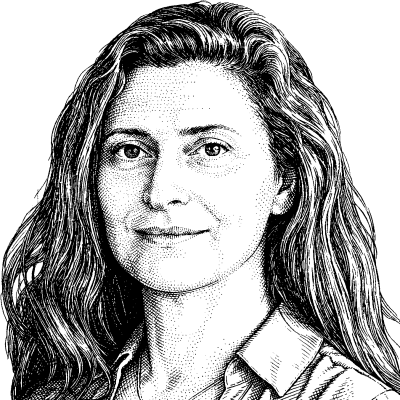
Irina Rish is a prominent researcher in the field of Artificial Intelligence, with a particular focus on achieving Artificial General Intelligence (AGI). She leads the Canada Excellence Research Chair in Autonomous AI, overseeing a large team of students, postdocs, interns, and collaborators. Her work explores the challenges and possibilities of creating AI systems that can generalize to a wide range of tasks and problems, mirroring human-level adaptability and learning capabilities. Rish’s research delves into the complexities of out-of-distribution generalization, aiming to develop AI agents capable of learning and performing tasks significantly different from their training data. She draws upon principles from statistics, machine learning, and classical AI to create systems that are not only capable of mastering specific skills but also demonstrate the capacity for continuous learning and adaptation, akin to human cognitive flexibility. Her work resonates with transhumanist themes by exploring the potential for AI to augment human intelligence and solve complex global challenges. Her presentation at the MTAConf 2024 focused on the technical aspects of AGI, emphasizing the importance of creating autonomous, multi-tasking systems capable of performing economically valuable work. Her engagement with the MTA highlights the intersection of AI research with philosophical and theological considerations regarding the future of humanity and the potential for technology to shape human evolution.
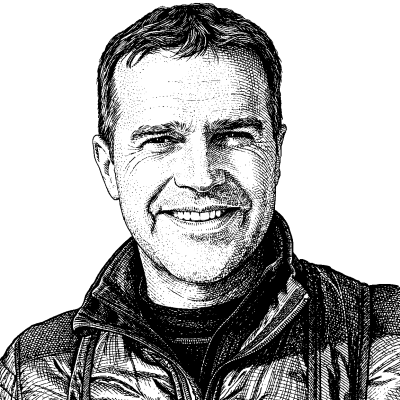
Luke Hutchison is a New Zealand-born computer scientist and researcher whose work explores the fundamental limits of computation, the architecture of biological systems, and the future of artificial intelligence. Known for his deep interest in the theoretical foundations of intelligence, Hutchison has spent his career at the intersection of high-performance computing and the quest to understand the nature of mind. Hutchison’s academic journey began in New Zealand before he moved to the United States to pursue advanced studies at the Massachusetts Institute of Technology (MIT). There, he completed his PhD in Computer Science and Computational Biology. His doctoral research reflected a fascination with the "software" of life, utilizing computational methods to decode complex biological patterns—a precursor to his later work in artificial neural networks and machine learning. Following his time at MIT, Hutchison joined Google, where he played a pivotal role in the company’s burgeoning AI initiatives. He co-founded a specialized AI research team within Google Machine Intelligence alongside renowned futurist and transhumanist Ray Kurzweil. During this tenure, he contributed to the development of technologies that bridge the gap between human language and machine understanding, helping to advance the capabilities of large-scale AI systems. Beyond his primary research, he is well known in the software engineering community as the creator of ClassGraph, a high-performance classpath and module scanner for the Java ecosystem. Hutchison is a frequent contributor to the dialogue surrounding the future of humanity and technology. In his presentation at the MTAConf 2024, titled “Is Intelligence Bigger than Computation?”, he challenged the prevailing materialist assumption that the human mind is merely a Turing-complete computer. Drawing on concepts from physics, information theory, and philosophy, he explored whether true intelligence requires a substrate that transcends traditional algorithmic computation, touching upon themes of consciousness and the potential for technological transcendence.
Quotations (7)
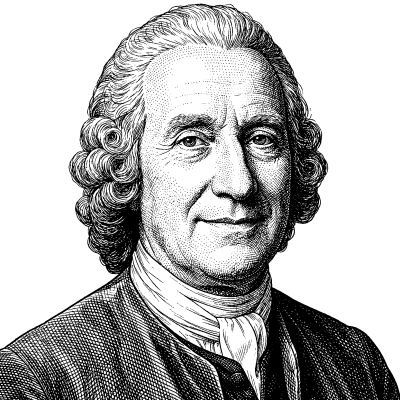
 B. H. RobertsB. H. Roberts