theology
Articles (35)
Transhumanist Advent: The Messianic Pattern
Explore the Messianic pattern of lifting others to godhood versus the Satanic pattern of self-exaltation, and what this means for transhumanist theology.
Mormon Naturalism
Explore how Mormon theology's unique naturalism—rejecting creation ex nihilo and a supernatural God—bridges faith and science, redefining divinity within natural law.
A Primer Primer
Discover the Mormon Transhumanist Association's Primers—short, accessible introductions to key ideas in Mormon Transhumanism, designed for meetups, conversations, and curious minds of all ages.
The Gospel of Tron
Explore the spiritual parallels between programming, creation, and Mormon theology—how creative processes mirror divine emergence and draw us closer to understanding God and eternity.
Transhumanist Advent: The Role of God
Explore how God's role evolves as humanity gains the knowledge and power to address evil—a thought-provoking Advent meditation on divine responsibility and human agency.
Authors (73)

Adam Davis is a physicist and educator. He received his degree from Case Western University and currently teaches physics at Wayne State College. His academic pursuits extend beyond conventional physics into areas that bridge science and theology, particularly within the context of Latter-day Saint beliefs. Davis’s interests lie in exploring the concept of “spirit matter,” a topic central to Mormon theology. He approaches this subject through a scientific lens, seeking to develop models and frameworks for understanding its nature and properties. His work examines the theological necessity of spirit matter and considers its implications for human advancement and the attainment of divine potential. At the Mormon Thought & Engineering Vision conference held in 2009, Davis presented his perspectives on spirit matter, acknowledging the limited understanding currently available while emphasizing the importance of continued exploration. He examined scriptural and anecdotal accounts, including descriptions of spirit bodies and the spirit world, to inform his approach and stimulate further discussion on this complex topic—ultimately suggesting that no current models are completely adequate. Davis served on the MTA Board of Directors for several years.
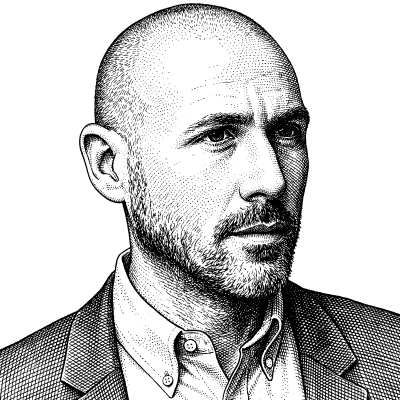
Adam Miller is a philosopher, educator, and author whose work serves as a bridge between contemporary continental philosophy and Latter-day Saint theology. He holds a bachelor’s degree from Brigham Young University and earned his master’s and PhD in philosophy from Villanova University. Miller currently serves as a professor of philosophy at Collin College in McKinney, Texas, where he also directs the college’s honors program. Miller is a leading voice in the “new Mormon theology” movement, characterized by a rigorous yet accessible approach to religious thought that often operates outside traditional institutional hierarchies. His scholarship draws heavily on the work of French philosophers such as Alain Badiou and Bruno Latour to re-examine Mormon metaphysics. In works like Speculative Grace: Bruno Latour and Object-Oriented Theology , Miller explores an “object-oriented” ontology, proposing a theological framework where grace and agency are embedded within the material relationships of the world—a perspective that resonates with discussions regarding the nature of matter and intelligence found within transhumanist discourse. A prolific writer, Miller has authored numerous influential books that challenge readers to engage deeply with scripture and tradition. His Letters to a Young Mormon is widely regarded for its candid and pastoral approach to questions of faith and agency. He has also produced a series of “urgent paraphrases” of biblical texts, including Grace Is Not God’s Backup Plan (Romans) and Nothing New Under the Sun (Ecclesiastes), which seek to unveil the tremendous power of ancient scripture for modern audiences. His engagement with secular culture is evident in The Gospel According to David Foster Wallace , a text praised by The New York Times for its “incantatory and gorgeous” prose. Beyond his writing, Miller has played a pivotal role in shaping the infrastructure of modern Mormon studies. He co-founded Salt Press, an independent publisher of Mormon theology later acquired by Brigham Young University’s Maxwell Institute. He also founded and serves as co-director of the Latter-day Saint Theology Seminar, an annual colloquium that fosters collaborative, close readings of scripture. Through these efforts, Miller has cultivated a space for rigorous theological experimentation, emphasizing a “theology of the present” that calls for active, transformative engagement with the divine in the here and now.

Albert Einstein
Albert Einstein (1879–1955) was a German-born theoretical physicist widely regarded as one of the most influential scientists in human history. His contributions to physics fundamentally reshaped humanity’s understanding of space, time, energy, and the cosmos. Born in Ulm, in the Kingdom of Württemberg in the German Empire, Einstein developed the special and general theories of relativity, and his mass–energy equivalence formula, E = mc², has been called the world’s most famous equation. In 1921, he received the Nobel Prize in Physics for his discovery of the law of the photoelectric effect, a pivotal contribution to the development of quantum theory. Einstein held academic positions at the University of Zurich, Charles University in Prague, the Prussian Academy of Sciences, and, after emigrating to the United States in 1933, the Institute for Advanced Study in Princeton, New Jersey, where he remained until his death. Beyond his scientific achievements, Einstein was a profound philosophical thinker who often reflected on the relationship between science, mystery, and what he described as a “cosmic religious feeling.” He expressed deep reverence for the rational structure of the universe, once stating that “the most incomprehensible thing about the world is that it is comprehensible.” While not religiously orthodox, his sense of awe at the intelligibility of nature resonates with transhumanist and theological themes of humanity’s capacity to comprehend and participate in the divine order of creation. Einstein’s legacy speaks powerfully to the Mormon Transhumanist vision: his life exemplifies the extraordinary potential of the human mind to transcend prior limitations, to unveil deeper truths about reality, and to expand the horizon of what humanity can know and become.
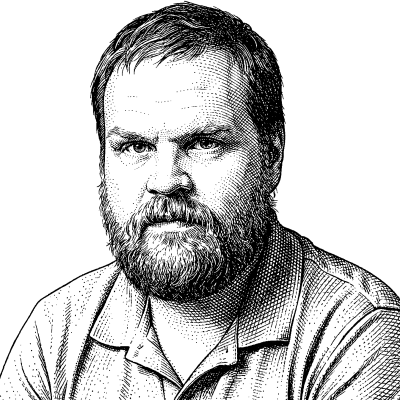
Allen Hansen was raised in northern Israel within the LDS faith, an experience that has profoundly shaped his academic and personal interests. His interdisciplinary scholarship spans a wide range of subjects, reflecting his diverse background and intellectual curiosity. Hansen’s research interests are particularly focused on the intersection of Mormonism, Judaism, and Biblical studies, with a keen interest in late antiquity. He also has scholarly interests in journalism, as well as Eastern European and Middle Eastern studies. This breadth allows him to explore unique connections between seemingly disparate fields. Hansen also brings a practical dimension to his scholarship through interests in business management and positive psychology, both of which he frames through the lens of Zion — exploring how organizational design and individual well-being might serve a larger communal vision. This thread of his work aligns naturally with the Mormon Transhumanist Association's broader project of bridging faith and posthumanism.

Allen Leigh is a veteran software engineer, electrical engineer, and author whose work seeks to harmonize the rigors of technical science with the principles of Latter-day Saint theology. With a professional career spanning forty-four years in the software industry and a background in electrical engineering, Leigh brings a pragmatic, systems-based perspective to religious inquiry, focusing on the structural mechanics of creation and eternity. Leigh’s intellectual contributions are best encapsulated in his book, One Mormon’s View of the Science-Religion Debate and the Quest for Eternity . In this text, he navigates the often-contentious boundary between empirical evidence and spiritual belief, arguing that the two disciplines are not mutually exclusive but rather complementary frameworks for understanding the universe. His work suggests that the perceived rift between science and religion often stems from a misunderstanding of the methodologies inherent to both. A key figure in discussions on Mormon Transhumanism, Leigh has applied his technical expertise to theological cosmology. His presentation at the MTAConf 2009 entitled “God, the Perfect Engineer” focused on the concept of “engineering design cycles”—the iterative processes used to plan, build, test, and refine complex systems. Leigh proposed a model in which God functions as a Master Engineer, utilizing similar design cycles in the creation of the earth. This framework raises profound questions regarding the nature of divine omnipotence and the practical realities of creation. By drawing parallels to earthly engineering projects—which are subject to constraints, iterations, and the risk of failure—Leigh investigates whether the creation of the earth followed a similar, non-linear path. He challenges his audience to consider if a divine creation project could, in theory, fail, and what the implications of such a failure would be for our understanding of God’s plan. Through this lens, Leigh encourages a view of the cosmos that appreciates the intricate, perhaps even experimental, nature of existence.
Quotations (1)
 Richard Dawkins