spirituality
Articles (22)
The Prophetic Voice
Explore the broader meaning of prophecy beyond Church leadership, examining how the spirit of prophecy—rooted in testimony and feeling—applies to every believer's life.
A Vision Worth Believing In: Transhumanism, Driven By Spiritual and Ethical Progress
Explore how transhumanism, guided by spiritual and ethical progress, offers a compelling vision of humanity's leap toward paradise—transcending limitations through technology, consciousness, and moral evolution.
White Hot Life
Explore Gary Lee Parker's visceral poem "White Hot Life," a cosmic meditation on humanity's desperate, dazzling fight against the dark—sparks of light streaming through interstellar night.
Transhumanist Advent: He touched the man's ear and healed him
Explore how Christ's healing of Malchus' ear challenges religious zealotry, calling us to be healers and peacemakers instead of defenders wielding institutional swords.
Transhumanist Advent: Worship
Explore how true worship means aspiring to emulate Christ, closing the moral gap between humanity and the divine—a transhumanist Advent meditation by Ben Blair.
Authors (65)
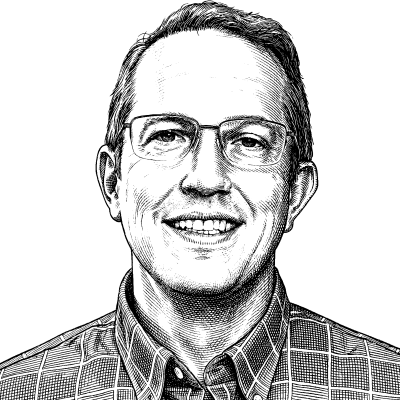
Adam Davis is a physicist and educator. He received his degree from Case Western University and currently teaches physics at Wayne State College. His academic pursuits extend beyond conventional physics into areas that bridge science and theology, particularly within the context of Latter-day Saint beliefs. Davis’s interests lie in exploring the concept of “spirit matter,” a topic central to Mormon theology. He approaches this subject through a scientific lens, seeking to develop models and frameworks for understanding its nature and properties. His work examines the theological necessity of spirit matter and considers its implications for human advancement and the attainment of divine potential. At the Mormon Thought & Engineering Vision conference held in 2009, Davis presented his perspectives on spirit matter, acknowledging the limited understanding currently available while emphasizing the importance of continued exploration. He examined scriptural and anecdotal accounts, including descriptions of spirit bodies and the spirit world, to inform his approach and stimulate further discussion on this complex topic—ultimately suggesting that no current models are completely adequate. Davis served on the MTA Board of Directors for several years.

Alan Watts
Alan Wilson Watts (1915–1973) was a British-born American philosopher, writer, and speaker best known for popularizing Eastern philosophy—particularly Zen Buddhism, Taoism, and Hinduism—for Western audiences. He remains one of the most influential interpreters of Asian religious thought in the twentieth century. Watts began his career in England, where he was involved with the Buddhist Lodge in London. He later moved to the United States, briefly serving as an Episcopal priest before leaving the ministry to pursue a broader philosophical vocation. He became a professor and dean at the American Academy of Asian Studies in San Francisco and authored over twenty-five books, including The Way of Zen (1957), Psychotherapy East and West (1961), and The Book: On the Taboo Against Knowing Who You Are (1966). His lectures, many of which survive as recordings, continue to reach millions worldwide. Watts’s central teaching—that the individual self and the universe are fundamentally one—resonates with Mormon Transhumanist themes of theosis and the expansive potential of consciousness. His insistence that human beings are not merely in the universe but of it, expressions of a deeper cosmic process, parallels the tradition’s interest in humanity’s divine trajectory. However, significant differences exist. Watts generally rejected the concept of a personal God, viewing divinity as an impersonal process rather than a being with whom one could have a relationship. He was skeptical of doctrines of sin and moral depravity, seeing guilt as a psychological obstacle rather than a theological reality. He also questioned the Western emphasis on individual free will, favoring a view of spontaneous action aligned with Taoist wu wei . Despite these divergences, his lifelong project of dissolving boundaries between the sacred and the secular, the human and the divine, offers rich material for dialogue with Mormon Transhumanist thought.

Albert Einstein
Albert Einstein (1879–1955) was a German-born theoretical physicist widely regarded as one of the most influential scientists in human history. His contributions to physics fundamentally reshaped humanity’s understanding of space, time, energy, and the cosmos. Born in Ulm, in the Kingdom of Württemberg in the German Empire, Einstein developed the special and general theories of relativity, and his mass–energy equivalence formula, E = mc², has been called the world’s most famous equation. In 1921, he received the Nobel Prize in Physics for his discovery of the law of the photoelectric effect, a pivotal contribution to the development of quantum theory. Einstein held academic positions at the University of Zurich, Charles University in Prague, the Prussian Academy of Sciences, and, after emigrating to the United States in 1933, the Institute for Advanced Study in Princeton, New Jersey, where he remained until his death. Beyond his scientific achievements, Einstein was a profound philosophical thinker who often reflected on the relationship between science, mystery, and what he described as a “cosmic religious feeling.” He expressed deep reverence for the rational structure of the universe, once stating that “the most incomprehensible thing about the world is that it is comprehensible.” While not religiously orthodox, his sense of awe at the intelligibility of nature resonates with transhumanist and theological themes of humanity’s capacity to comprehend and participate in the divine order of creation. Einstein’s legacy speaks powerfully to the Mormon Transhumanist vision: his life exemplifies the extraordinary potential of the human mind to transcend prior limitations, to unveil deeper truths about reality, and to expand the horizon of what humanity can know and become.

Ally Isom is a business and community leader with a diverse background spanning public service, corporate strategy, and political engagement. Currently a Republican candidate for the United States Senate in Utah, she brings a wealth of experience to the political arena. Isom has demonstrated a commitment to fostering authentic human connection, a theme echoed throughout her work and personal interests. This dedication aligns with the Mormon Transhumanist Association’s focus on leveraging technology to enhance human potential and spiritual growth. Prior to her senatorial bid, Isom held prominent positions in Utah state government, including Deputy Chief of Staff and spokesperson for Governor Gary Herbert. She also served in public affairs, communication, and branding roles within the Church of Jesus Christ of Latter-day Saints. Her career transitioned into the private sector, where she served as Chief Strategy and Marketing Officer and, eventually, acting executive officer for Evok Nano, a company focused on innovation and technology. Isom’s presentation at MTAConf 2022 highlighted the vital importance of human connection, particularly in the wake of the COVID-19 pandemic. She explored the neuroscience behind connection, emphasizing its role in strengthening the immune system, promoting mental and emotional well-being, and fostering spiritual growth. This perspective resonates with transhumanist ideals of enhancing human capabilities and experiences through technology and community engagement. Outside of her professional life, Isom enjoys a variety of activities, including riding, hiking, cooking, and indulging in her favorite dish, mole poblano, preferably enjoyed on a beach with a good book. She is married to Eric and they have four children and five grandchildren.

Amit Goswami is a scientist and researcher who challenges mainstream scientific materialism, particularly in its application to consciousness, health, and healing. He advocates for the integration of spirituality with medicine and seeks to demonstrate the importance of consciousness in these areas—a view often dismissed by conventional scientific paradigms. Goswami draws heavily on the principles of quantum physics to argue for a reality where consciousness plays a fundamental role. He posits that the prevailing materialistic worldview, which treats the body and mind as mere machines, inhibits our understanding of health, healing, and the human experience. He believes that quantum physics offers an alternative perspective, one that acknowledges the subjective aspect of consciousness and its potential impact on our well-being. At a 2013 conference jointly organized by the Integrative Health Network and the Mormon Transhumanist Association, Goswami presented on “Quantum Physics, Consciousness and Health.” He emphasized the disconnect between the implications of quantum physics and its public perception, suggesting that media and academia have perpetuated materialistic concepts to the detriment of a more holistic understanding of consciousness and its potential for influencing health and personal agency. His work attempts to bridge the gap between scientific inquiry and spiritual understanding, encouraging a reevaluation of the role of consciousness in our lives.
Quotations (5)

 Alan Watts
 James Hughes
 Freeman Dyson
Videos (11)
Chris Bradford
Open Thou Mine Eyes
Chris Bradford explores the tension between technological instrumentalism and genuine human relationship, drawing on Martin Buber's distinction between "I-It" and "I-Thou" encounters. He argues that a purely technological approach to the world risks reducing people and nature to mere objects, and that Mormon transhumanism must complement its technological aspirations with the cultivation of empathy, charity, and recognition of the divine in others. Bradford contends that the grace saturating the world—visible when our "eyes are opened"—calls disciples of Christ to see and serve God in every neighbor, making the transhumanist project a fundamentally religious endeavor.
Ben Blair
Seek Ye First the Kingdom of God
Ben Blair argues that strong communities are byproducts of pursuing worthy aims rather than ends in themselves. He critiques both religious institutions that equate themselves with the kingdom of God and secular groups that make community their primary goal, suggesting that both miss the driving force of shared purpose. Drawing on examples from the D-Day invasion to the Mormon pioneers, Blair proposes that the Mormon Transhumanist Association’s aspirational vision—working collaboratively toward becoming gods who lift each other up—provides the kind of "work cut out for us" that sustains robust, long-lasting communities.
Chris Bradford
Transhumanism as Grace
Chris Bradford responds to Richard Bushman’s question about grace in transhumanism by proposing that divine grace is best understood as “givenness”—everything God has given us, in whom we “live, move, and have our being.” Drawing on Russian cosmist Nikolai Fedorov and Mormon scripture, he argues that God needs humanity to complete the divine work begun in creation. Bradford contends that all matter is infused with divinity, blurring the line between divine and human action, and that the transhumanist project—if infused with the spirit of Christ—can build a temple rather than another Tower of Babel.
Byron Belitsos
The Transhumans of Pre-history According to the Urantia Revelation
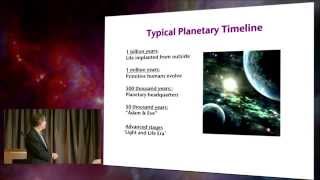
Byron Belitsos introduces the Urantia Revelation—a purportedly celestial text published in 1955—and explores its implications for transhumanist thought. He argues that the Urantia Book describes prehistoric genetic interventions by celestial beings, including a mission by Adam and Eve as biological "uplifters," and contends that such transhumanist projects require spiritual depth and celestial oversight to succeed. Belitsos connects these ancient narratives to contemporary scientific findings, including genetic research suggesting a single-source introduction of brain-enhancing genes roughly 37,000 years ago, and calls for an "integrally informed" transhumanism grounded in spirituality rather than materialism.
Dorothy Deasy
The Kingdom of God and the Transhuman Age
Dorothy Deasy argues that the perceived threats of transhumanism—often compared to Nazi eugenics—stem not from technology itself but from ideologies of total domination and the commercialization of humanity. Drawing on Hannah Arendt’s analysis of totalitarianism, she contends that spiritual transhumanism, grounded in nonviolence, human rights, and co-creation with God, can bring about the promises of the kingdom. Deasy calls for ecosystem and symbiotic thinking across all institutions, urging that transfiguration of society must be intentional and communal rather than individualistic.