space exploration
Articles (8)
The Sacred Road to the Stars
Giulio Prisco reflects on the long, inspiring journey to the stars—blending space exploration, patience, and sacred wonder as humanity takes its first steps beyond Earth.
Gods in Our Image
Do we create Gods in our own image, or do evolving beings face eternal challenges? Explore how natural theology reveals beautifully imperfect heavens.
What is Transhumanism? A Network Analysis of Wikipedia Pages
Explore transhumanism through network analysis of Wikipedia pages, revealing hidden connections and communities within 23,000 pages and 41,000 links mapped from the transhumanism article.
The Cosmos as Imagined in the Beatitudes
Explore the Beatitudes through Mormon Transhumanist ideals—what if "blessed" literally describes the state of Gods, and humanity's path to Godhood mirrors an eternal chain of divine progression?
Creator Status: Are We There Yet?
Exploring how No Man's Sky's 18 quintillion procedurally generated planets brings humanity closer to creator status—and what that means for our theological and technological future.
Authors (28)

Carl Sagan
Carl Edward Sagan (1934–1996) was an American astronomer, planetary scientist, cosmologist, and one of the most influential science communicators of the twentieth century. His ability to convey the wonder of the cosmos to a broad public audience made him a defining figure in popular science. Sagan spent much of his career at Cornell University, where he served as a professor of astronomy and director of the Laboratory for Planetary Studies. He contributed significantly to planetary science, including research on the atmospheres of Venus and Titan, and played a key role in NASA's Mariner, Viking, Voyager, and Galileo missions. He helped design the Pioneer plaque and the Voyager Golden Record—messages from humanity launched into interstellar space. His 1980 television series Cosmos: A Personal Voyage became one of the most widely watched programs in public television history, and his novel Contact (1985) explored humanity's first encounter with extraterrestrial intelligence. Sagan was a passionate advocate for scientific literacy, critical thinking, and the search for life beyond Earth. While he identified as an agnostic and approached questions of God and transcendence through a scientific lens, his work resonated deeply with themes central to transhumanist thought: the aspiration to transcend present human limitations, the ethical stewardship of technology, and a profound reverence for the potential of conscious life in the universe. His famous declaration that "we are a way for the cosmos to know itself" echoes theological ideas of humanity's participatory role in creation and theosis—the notion that intelligent beings may grow toward ever-greater understanding, compassion, and capacity. Sagan's legacy continues to inspire those who see science and wonder as complementary paths toward human flourishing.

David Brin
David Brin (born 1950) is an American scientist and science fiction author widely recognized for his explorations of technological progress, accountability, and the future trajectory of human civilization. A physicist by training, with a PhD from the University of California, San Diego, Brin has become one of the most prominent voices in contemporary science fiction, celebrated for works that grapple seriously with the responsibilities that accompany advancing knowledge and power. Brin is perhaps best known for his Uplift series, which imagines a galaxy in which elder species genetically elevate (or “uplift”) younger species to sapience, creating complex webs of patronage and obligation. The series earned him multiple Hugo and Nebula Awards and introduced themes that resonate deeply with transhumanist thought: the idea that intelligence and consciousness can be cultivated, expanded, and shared across species, and that such uplift carries profound moral responsibilities. His standalone novel The Postman (1985), later adapted into a film, explores how communities rebuild civilization after catastrophe through acts of hope and civic trust. His nonfiction work The Transparent Society (1998) argues that openness and mutual accountability, rather than secrecy, are the best safeguards for freedom in an age of pervasive technology. Brin is a self-described advocate of the Enlightenment tradition, championing science, democratic governance, and an optimistic but critical view of human progress. He has been vocal in futurist and transhumanist circles, generally supporting the idea that humanity can and should use technology to improve the human condition, overcome biological limitations, and expand into the cosmos. His vision of “otherness”—the moral imperative to consider perspectives beyond one’s own—aligns with broader transhumanist commitments to expanding empathy and capability. From the perspective of Mormon Transhumanism, Brin’s work offers rich resonances: his uplift narratives echo themes of theosis and compassionate creation, wherein more advanced beings extend their capacities to others—a pattern the New God Argument finds deeply meaningful. His emphasis on accountability and transparency complements the Mormon Transhumanist commitment to ethical stewardship of technology. Where Brin’s views may diverge is in his secular, Enlightenment-centered framework; he generally frames progress in terms of human reason and democratic institutions rather than divine grace, prophetic authority, or the restored Gospel. He has at times expressed skepticism toward religious institutions as arbiters of truth. Nevertheless, his abiding faith in humanity’s capacity for moral growth and his insistence that advanced power demands advanced compassion place him in substantial sympathy with the Mormon Transhumanist vision of becoming compassionate creators.

David Deutsch
David Elieser Deutsch (born 1953) is a British-Israeli physicist at the University of Oxford, widely regarded as one of the founding fathers of quantum computation. A Fellow of the Royal Society, Deutsch has profoundly shaped our understanding of the physical world and the nature of reality itself. Deutsch earned his PhD from the University of Oxford and has spent much of his career at the Clarendon Laboratory. In 1985, he published a landmark paper describing the first universal quantum computer, demonstrating that a quantum mechanical system could simulate any physical process—a breakthrough that launched the field of quantum computing. He further contributed to the development of the Deutsch-Jozsa algorithm, one of the earliest demonstrations of quantum computational advantage. His intellectual framework draws heavily on the many-worlds interpretation of quantum mechanics championed by Hugh Everett. Beyond his technical contributions, Deutsch is renowned as a public intellectual and author. His books The Fabric of Reality (1997) and The Beginning of Infinity (2011) weave together quantum physics, epistemology, the theory of computation, and the theory of evolution into a unified worldview. In The Beginning of Infinity , he argues that problems are soluble through the creation of knowledge, and that there is no fundamental limit to human progress—a deeply optimistic vision of unbounded human potential. Deutsch’s philosophy resonates with transhumanist themes central to the Mormon Transhumanist Association’s mission. His conviction that human beings are not cosmically insignificant but are instead “universal explainers” capable of unlimited understanding and transformation of reality echoes theological ideas of theosis and humanity’s divine potential. His insistence that the reach of human knowledge and creativity is genuinely infinite offers a scientific and philosophical foundation for hope in humanity’s capacity to transcend current limitations.
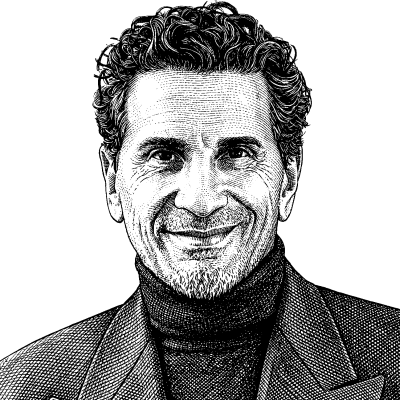
Felix Clairvoyant is a molecular biologist and prominent voice within the International Raelian Movement, advocating for a synthesis of “atheistic intelligent design” and transhumanist philosophy. Born in France and raised in Montreal, Canada, he cultivated an early passion for the sciences that led to a fifteen-year career in the biotechnology industry. This scientific rigor deeply informs his theological perspective, grounding his metaphysical claims in materialist biology rather than spiritual mysticism. As a leader in the Raelian Movement, Clairvoyant articulates the belief that life on Earth was scientifically engineered by an advanced extraterrestrial species known as the Elohim. Distinguishing his views from both traditional theism and evolutionary chance, he proposes a model of “scientific creationism.” In this framework, the Elohim are not gods but flesh-and-blood beings who have mastered the very technologies—such as genetic engineering and space travel—that humanity is currently developing, serving as a template for our future evolution. Clairvoyant gained recognition in the broader futurist community for his presentation at the Religion and Transhumanism Conference organized by the MTA back in 2014. There, he argued that Raelism is inherently transhumanist, viewing immortality not as a supernatural afterlife but as a technical problem solvable through cloning and memory transfer. He posits that acknowledging our extraterrestrial designers is a crucial step toward humanity’s maturation, framing peaceful technological advancement as a mandate for joining the galactic community. Beyond his philosophical advocacy, Clairvoyant has applied his analytical skills to a successful career in real estate in the San Francisco Bay Area. He maintains a disciplined lifestyle centered on meditation and chess, viewing these practices as complementary to his pursuit of mental clarity. He continues to serve as a bridge between the Raelian worldview and the wider transhumanist movement, promoting a future defined by scientific mastery and longevity.
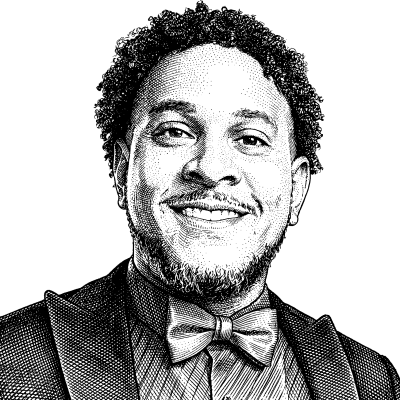
Gabriel Rothblatt is a prominent figure within the transhumanist movement, particularly known for his involvement with the Terasem movement, which he represents. Terasem espouses a secular approach to religious transhumanism. He is a member of the Mormon Transhumanist Association, attending their conferences for at least two years, starting no later than 2023. He considers himself a Futurist Philosopher. Rothblatt holds a bachelor’s degree in political philosophy. He experienced a “spiritually transhuman experience” at the 2023 Mormon Transhumanist Association conference, further fueling his drive to achieve more. This experience coincided with the publication of his first piece of Futurist Philosophy by the Institute for Ethics and Emerging Technologies. Beyond his involvement in transhumanism, Rothblatt is also active in politics. He resides in Florida with his wife and four children. In 2024, he announced his candidacy for U.S. Congress, running in Florida’s eighth district, which encompasses the Kennedy Space Center. He views his transhumanist identity as a significant influence on his decision to seek public office.
Quotations (3)

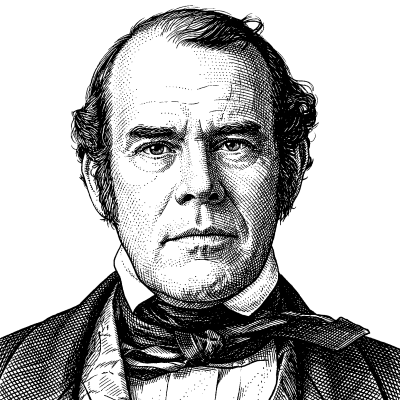 Parley P. Pratt